While most people immediately picture either their local Bumblebee or the European honey bee (Apis mellifera) when thinking of bees, those are just two species among thousands native to North America and tens of thousands worldwide. Unlike social honey bees that live in massive colonies, the majority of native bees are solitary, prone to non-violence, and exhibit a wide array of colors, sizes, adaptations, and nesting behaviors. Some are active for a few weeks, others only visit certain species of plant. Some live in small nooks, others dig holes in the ground.
Over the past seasons, I’ve been taking macro photographs of wild bees visiting the garden and surrounding flowers using a Sony 7C with a the Sony 90mm Macro G lens. Getting close enough to resolve the details that distinguish different bee families, much less genus or species, requires both a long focal length and as much magnification as one can afford. The Sony macro with 1:1 magnification at 90mm is a decently close experience.
I was surprised to find just how much variety there was in the suburbs of Philadelphia, and started snapping pictures of new and interesting bees while traveling as well. This post is a photographic catalog and identification reference for the major bee families found in my garden, along with some locations I’ve traveled to, highlighting genus and species wherever positive identification is possible. I’ll break these images down by taxonomy, but often will not be able to point out a specific species. Largely this is because bee species can be indistinguishable to the untrained eye, especially without a microscope.
All images below are clickable to view larger, zoomable versions of the macro photographs.
Apidae (Honey, Bumble, Long-Horned, and Digger Bees)
Apidae is a large, diverse family containing social bees (honey bees and bumble bees) along with solitary ground and twig nesters (long-horned and carpenter bees). Females typically carry pollen on their hind legs, either in a smooth, concave corbicula (pollen basket) or within dense brushy hairs (scopa).
Western Honey Bee (Apis mellifera)
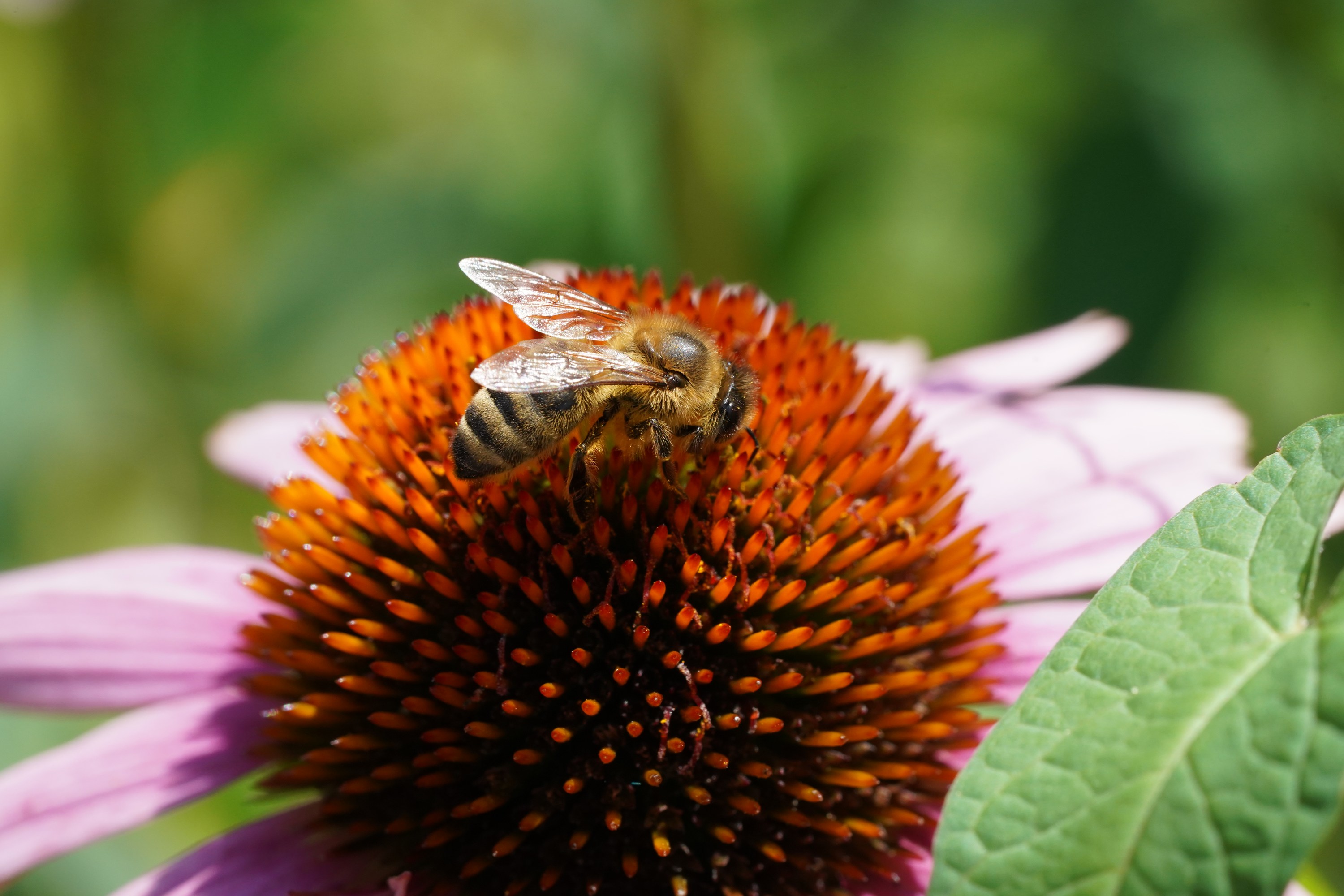
Apis mellifera worker foraging on blossom. Note the hairy body with three segments and two antennae.
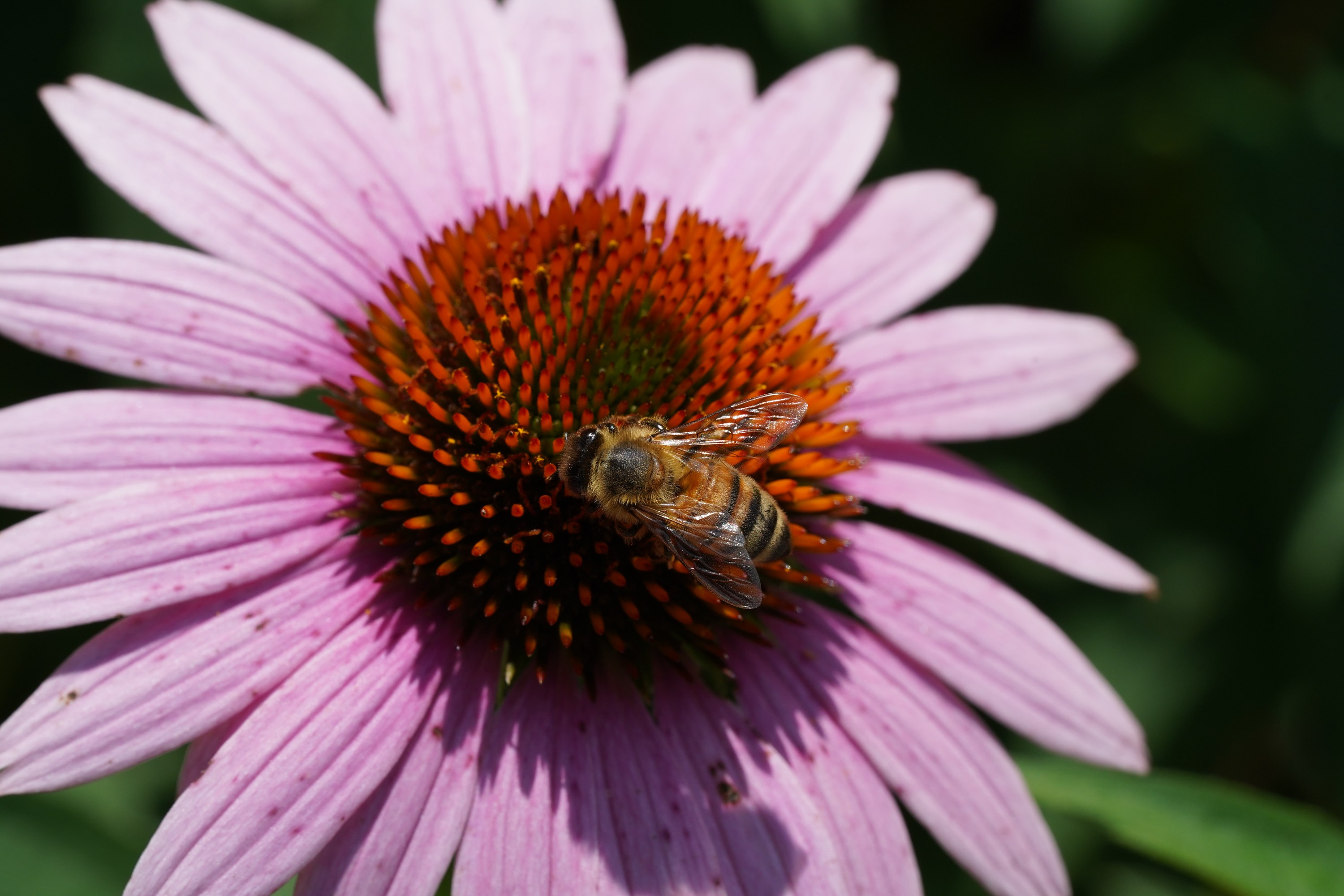
Apis mellifera back profile with the wings in sharp focus.
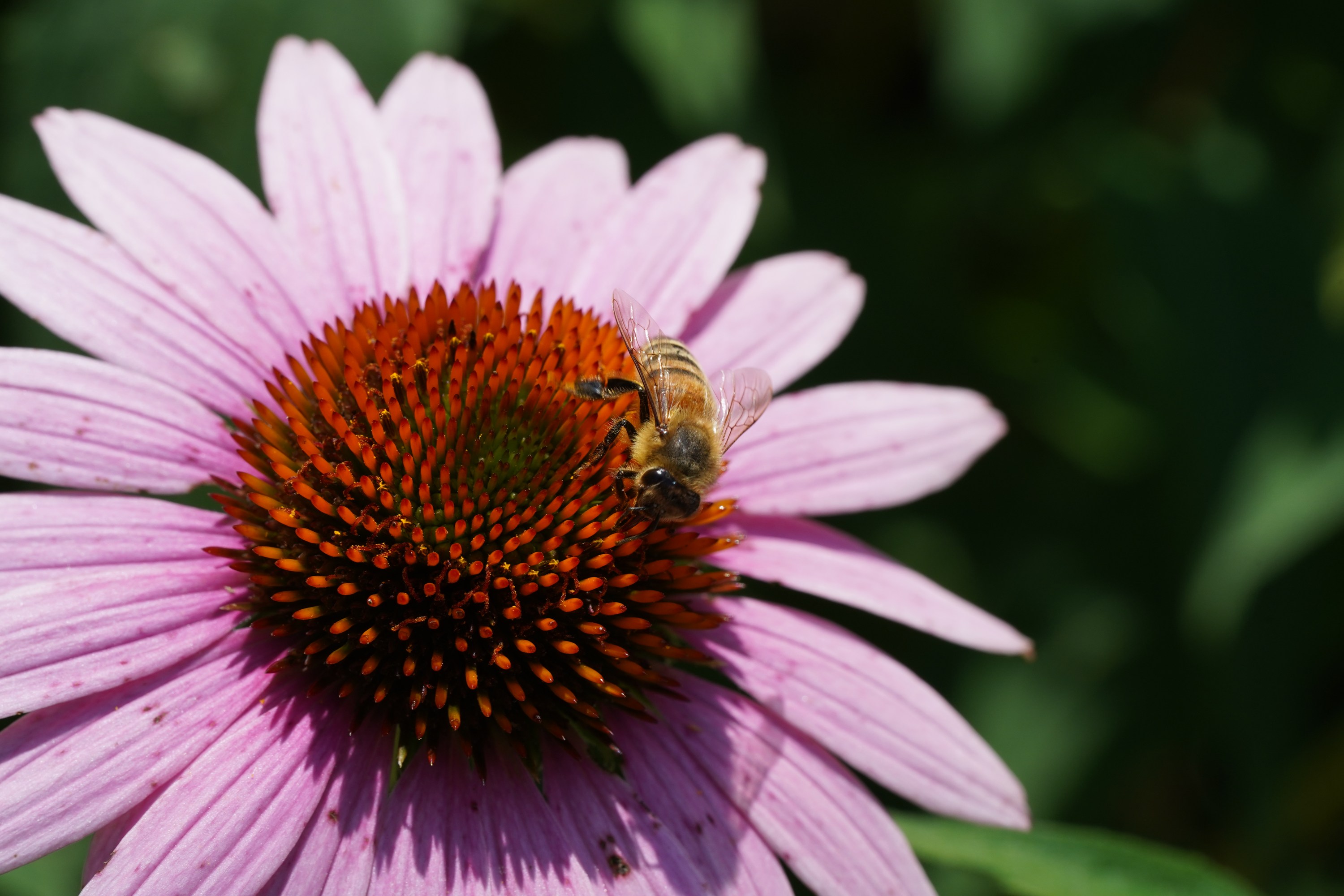
Apis mellifera close-up on floral head. You can see the nectar-sucking mouth parts extended from the bee’s mandibles extracting some nectar from this cone flower.
Apis mellifera is quite distinct from most other bees in behavior and appearance, being the only bee that stockpiles honey and wax, making it quite attractive to humans for tens of thousands of years. They can sting, and will to defend their colony, which can grow to many tens of thousands of individuals.
Bumble Bees (Bombus)
Bumble bees are large, robust social bees capable of producing heat via flight muscle shivering, just like honeybees, allowing them to forage in cold or overcast weather when other bees are dormant. They are also known for “buzz pollination” (sonication) to dislodge pollen from flowers, which is particularly effective at pollinating certain plants. There are many species of bumble bees and they can sometimes be distinguished by the color of the abdomen segments.
Common Eastern Bumble Bee (Bombus impatiens)
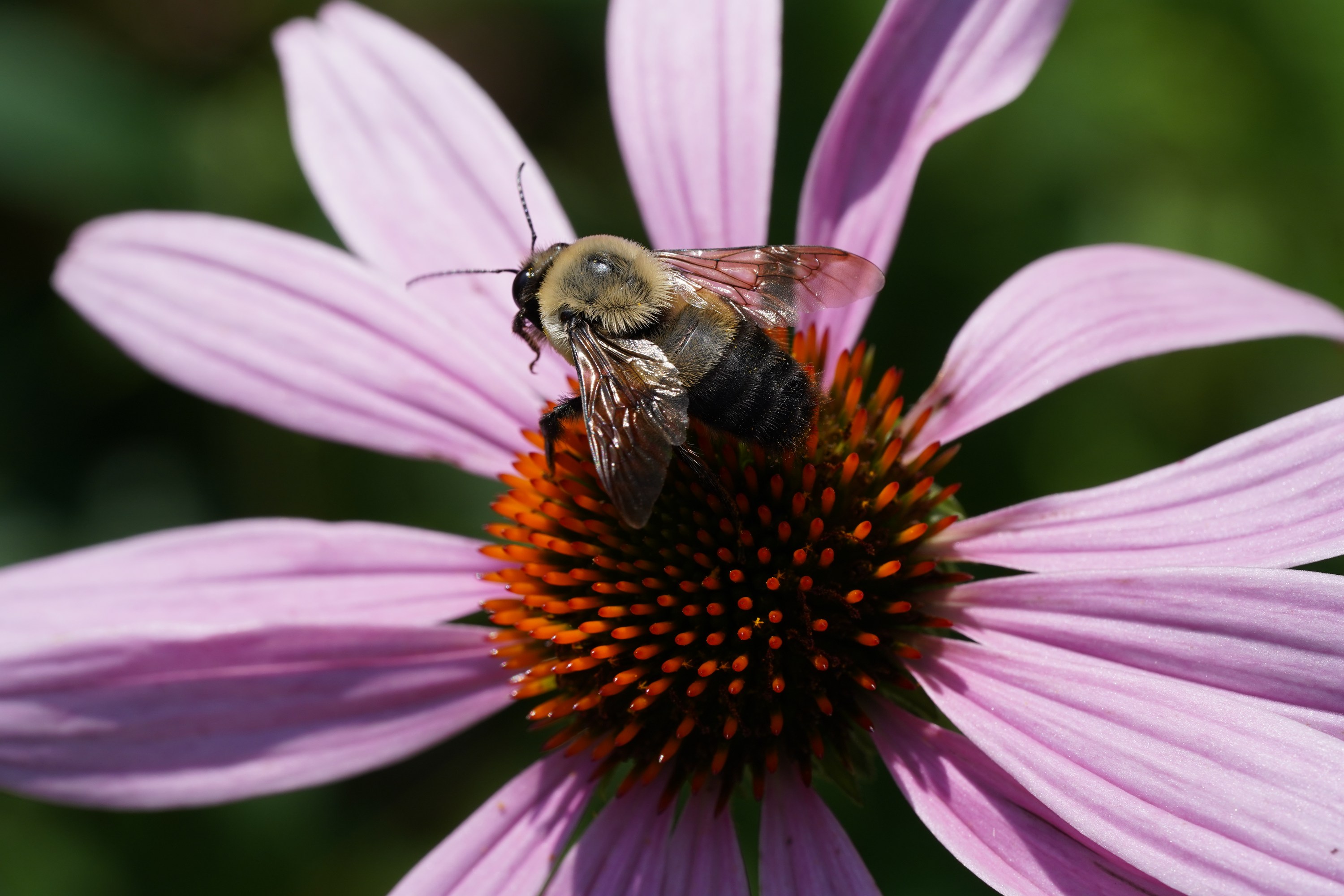
Bombus impatiens worker. Distinguishable by the yellow first abdominal segment (T1) with the remainder entirely black.
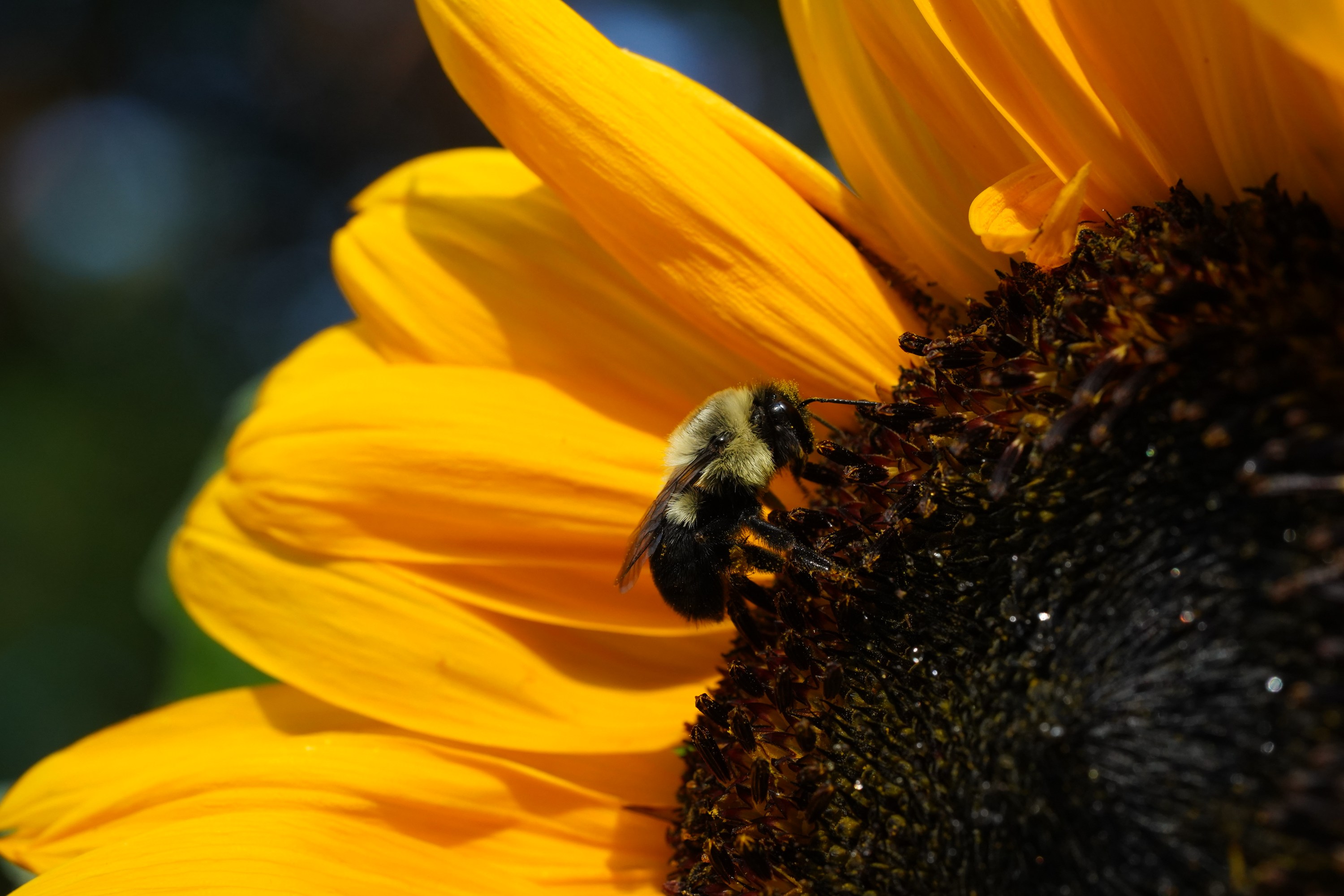
Bombus impatiens getting nectar from a sunflower.
Two-Spotted Bumble Bee (Bombus bimaculatus)
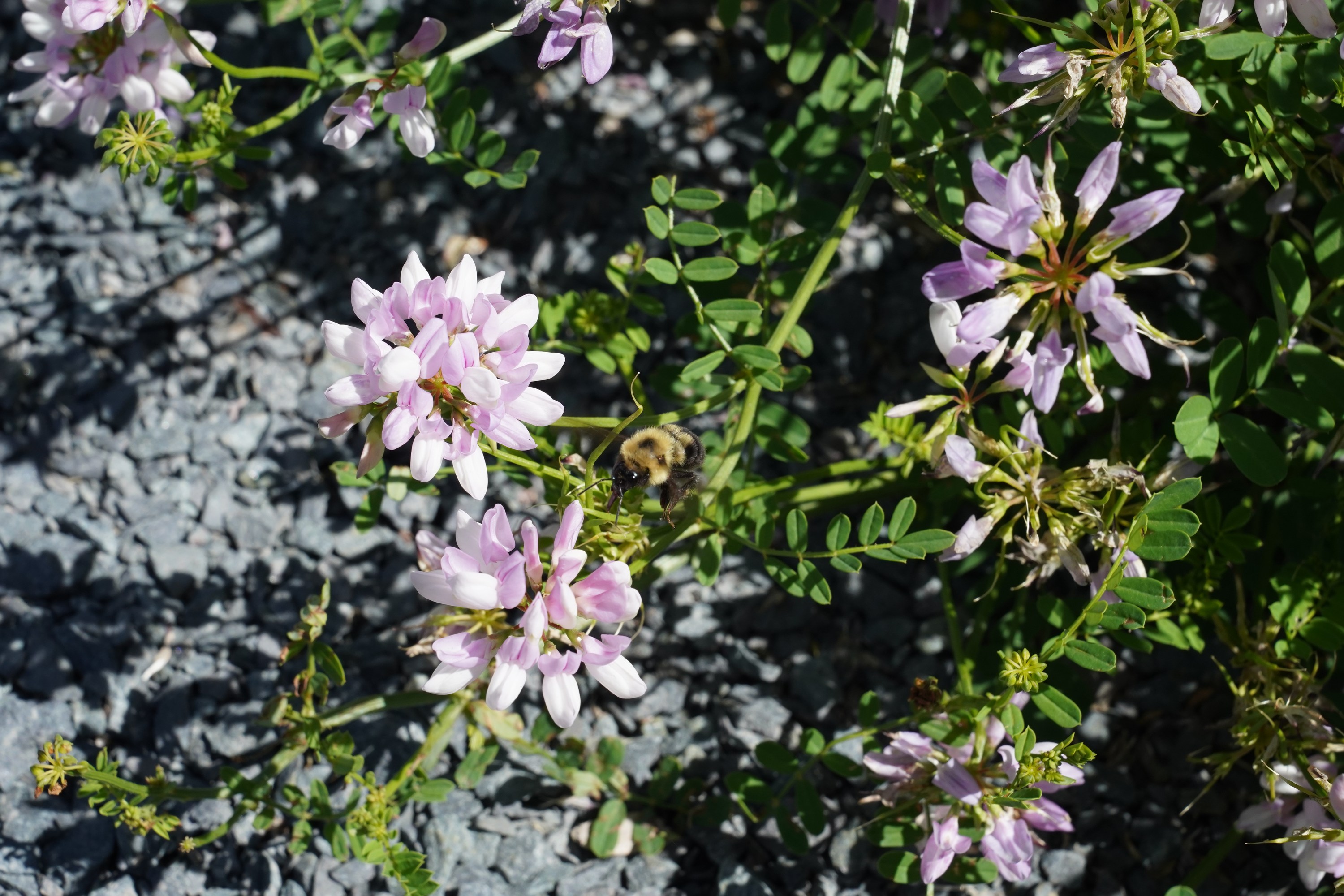
Bombus bimaculatus. Identified by the yellow patch on T1 and two distinct yellow spots / central ‘W’ patch on abdominal segment T2.
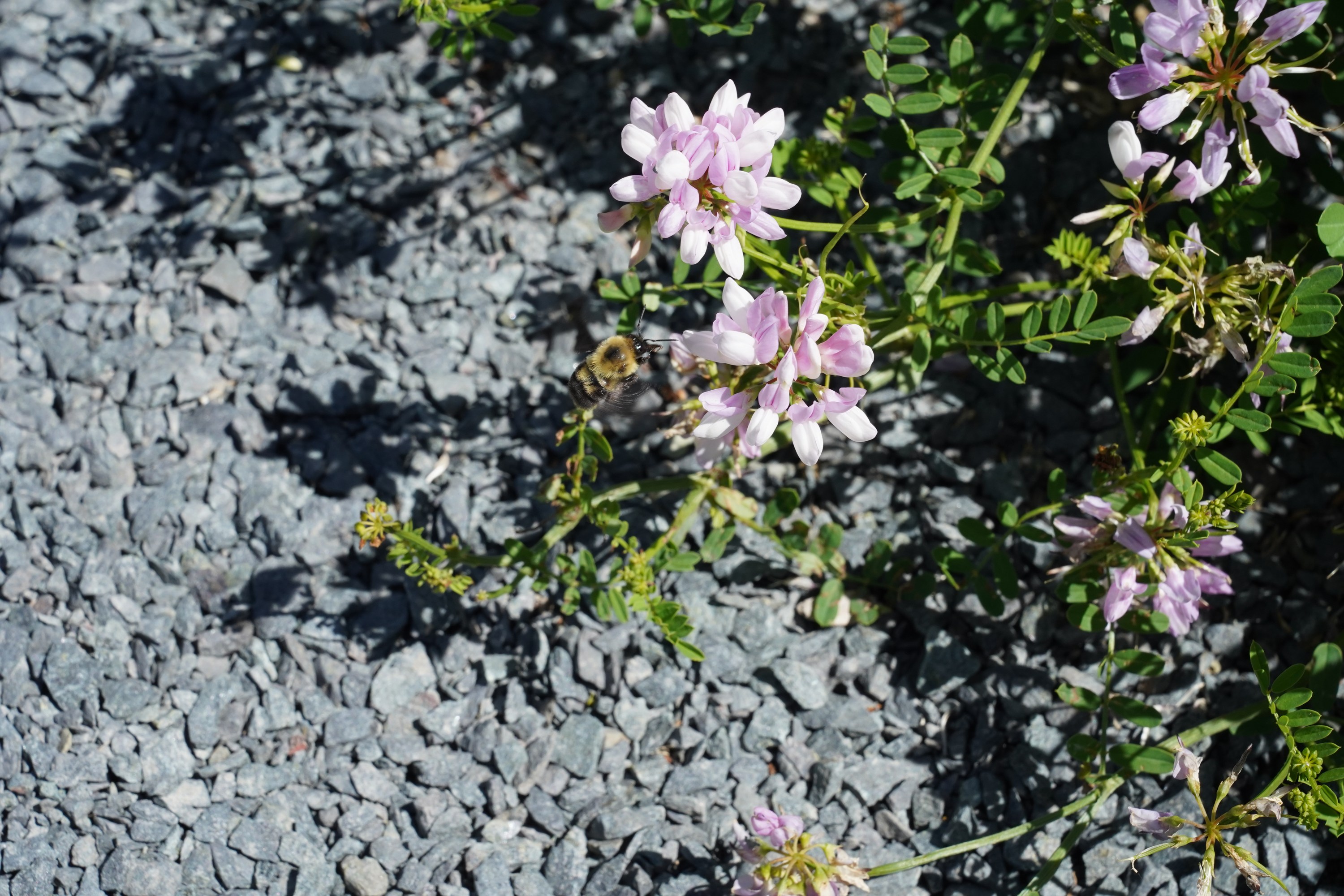
Bombus bimaculatus foraging on summer bloom. These were from Minnasota.
Tricolored / Orange-Belted Bumble Bee (Bombus ternarius)
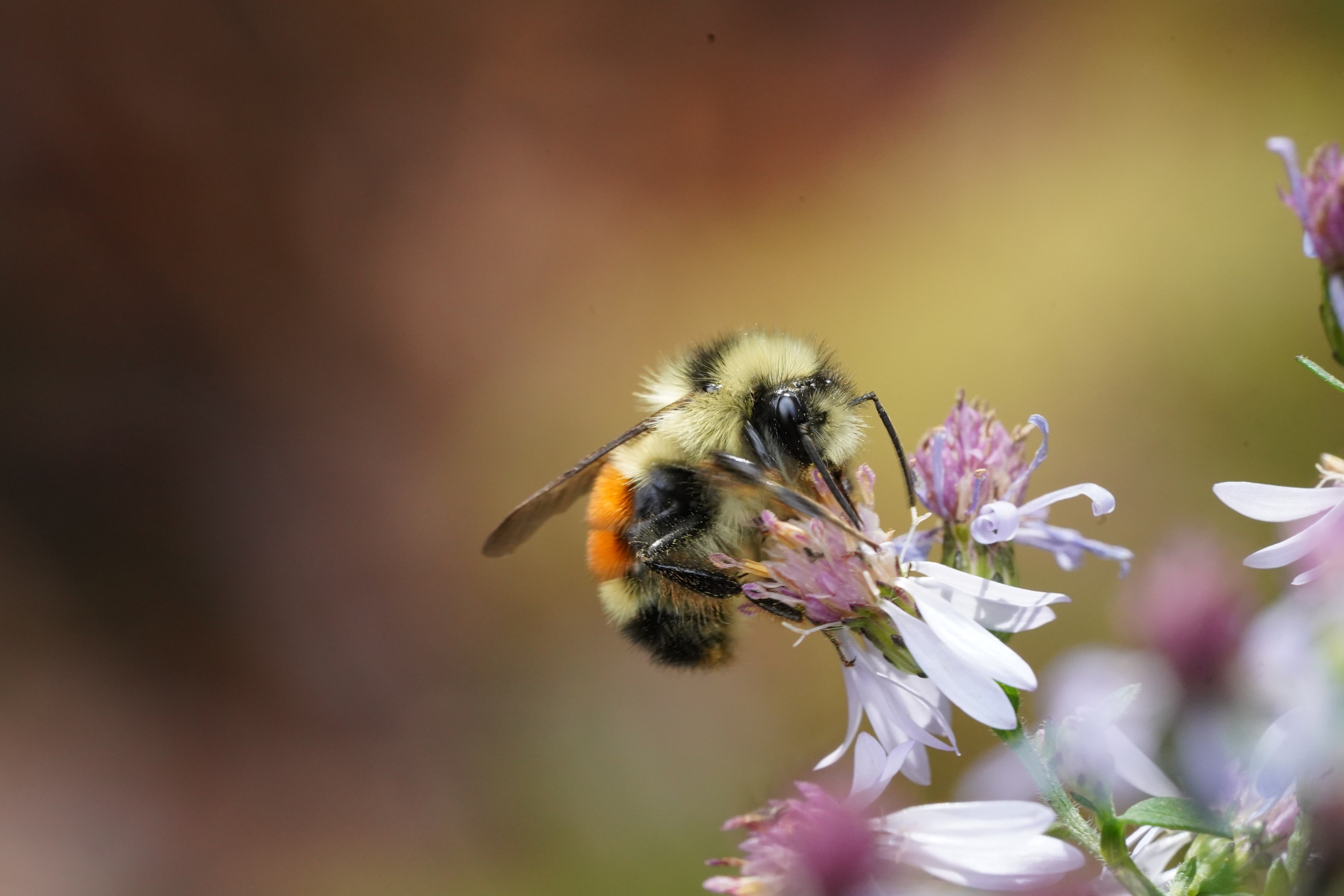
Bombus ternarius (Tricolored Bumble Bee). Striking vivid orange bands on abdominal segments T2 and T3 bordered by yellow and black.
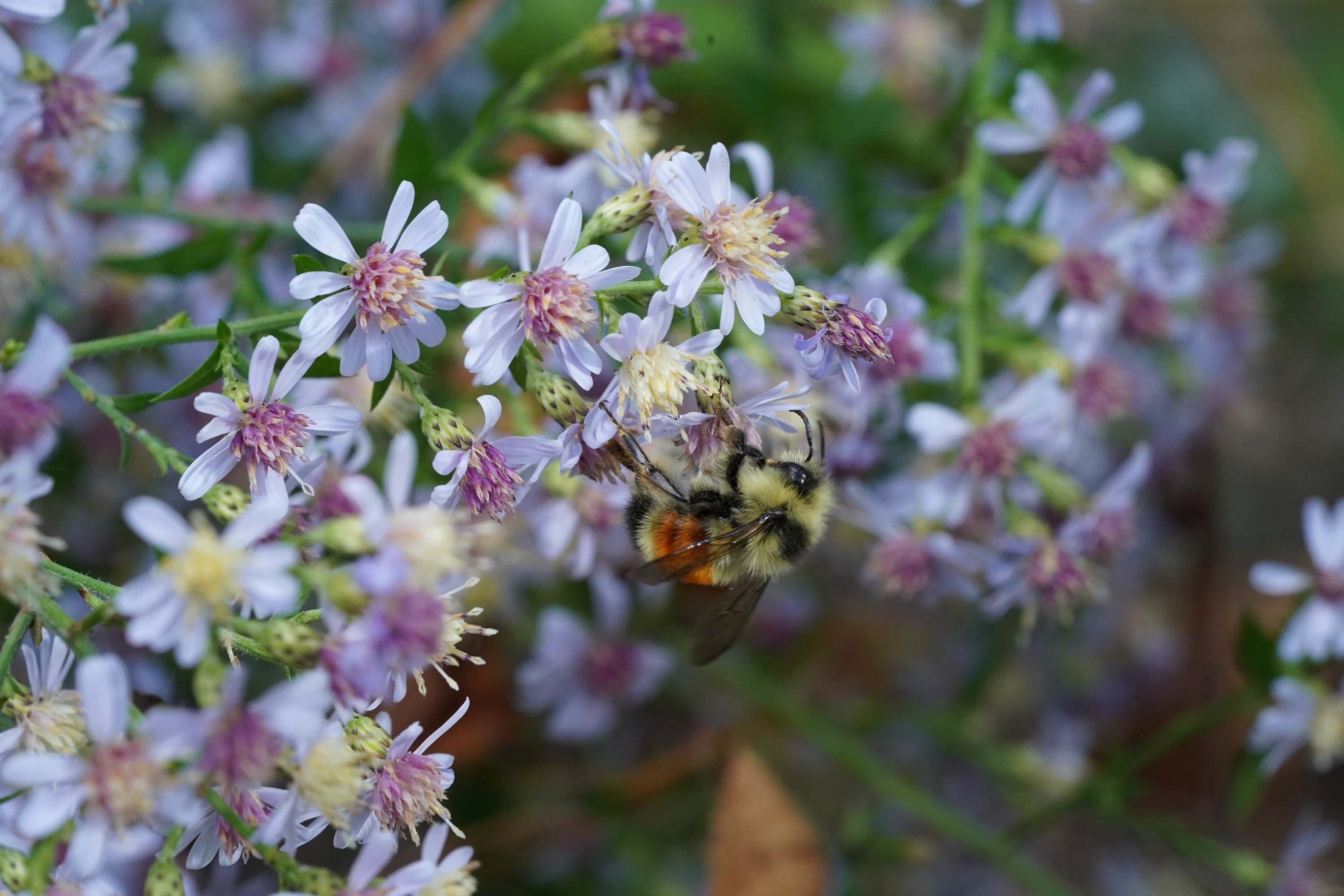
Bombus ternarius in profile, highlighting the rich orange-red coloration. Ran across this bee in Acadia National Park
Other Bumble Bee Specimens (Bombus sp.)
Everywhere has some local bumblebee species. Some I haven’t been able to identify, especially if they’re not local to me.
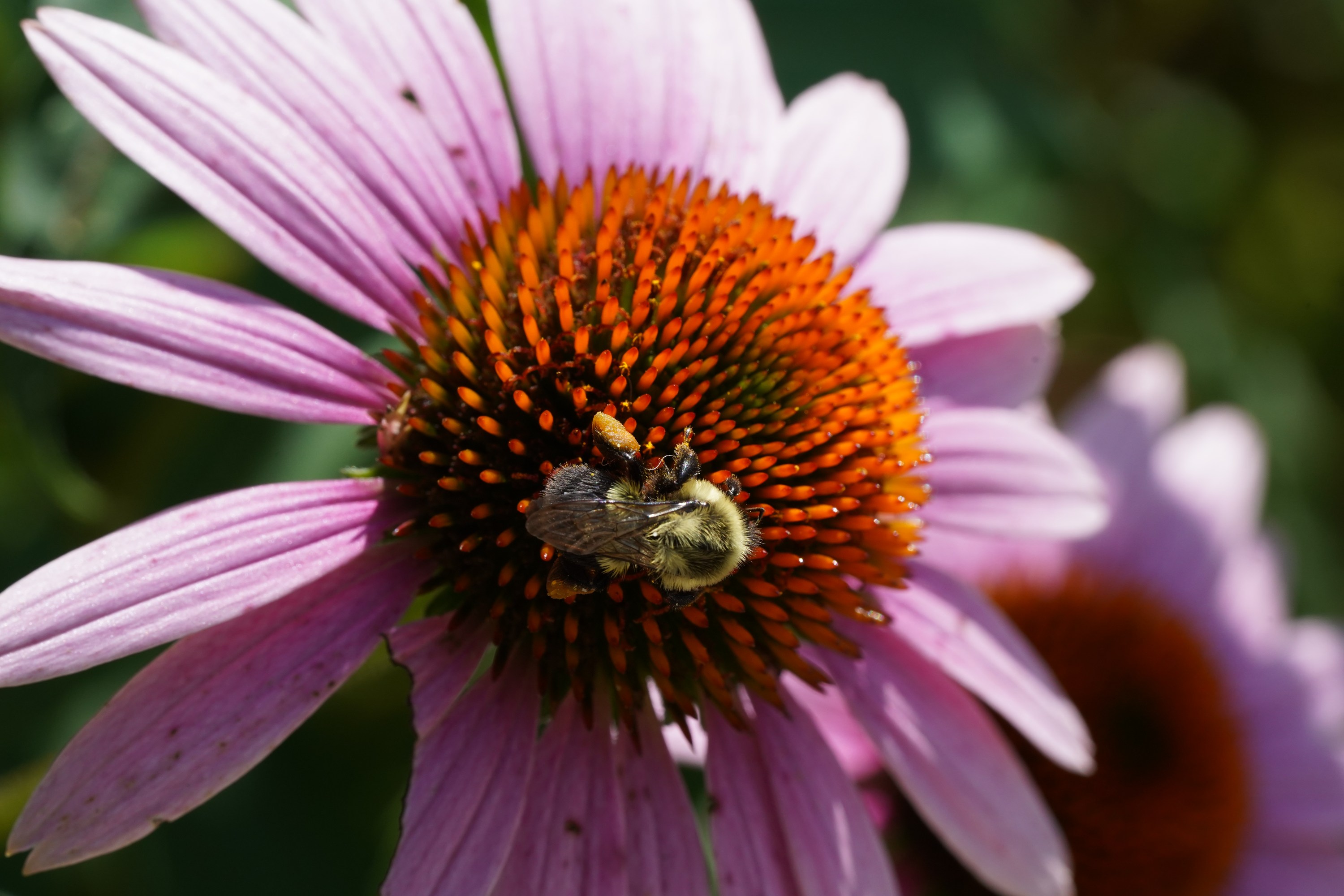
Bombus sp. Distinctive thoracic patterning and abdominal banding.
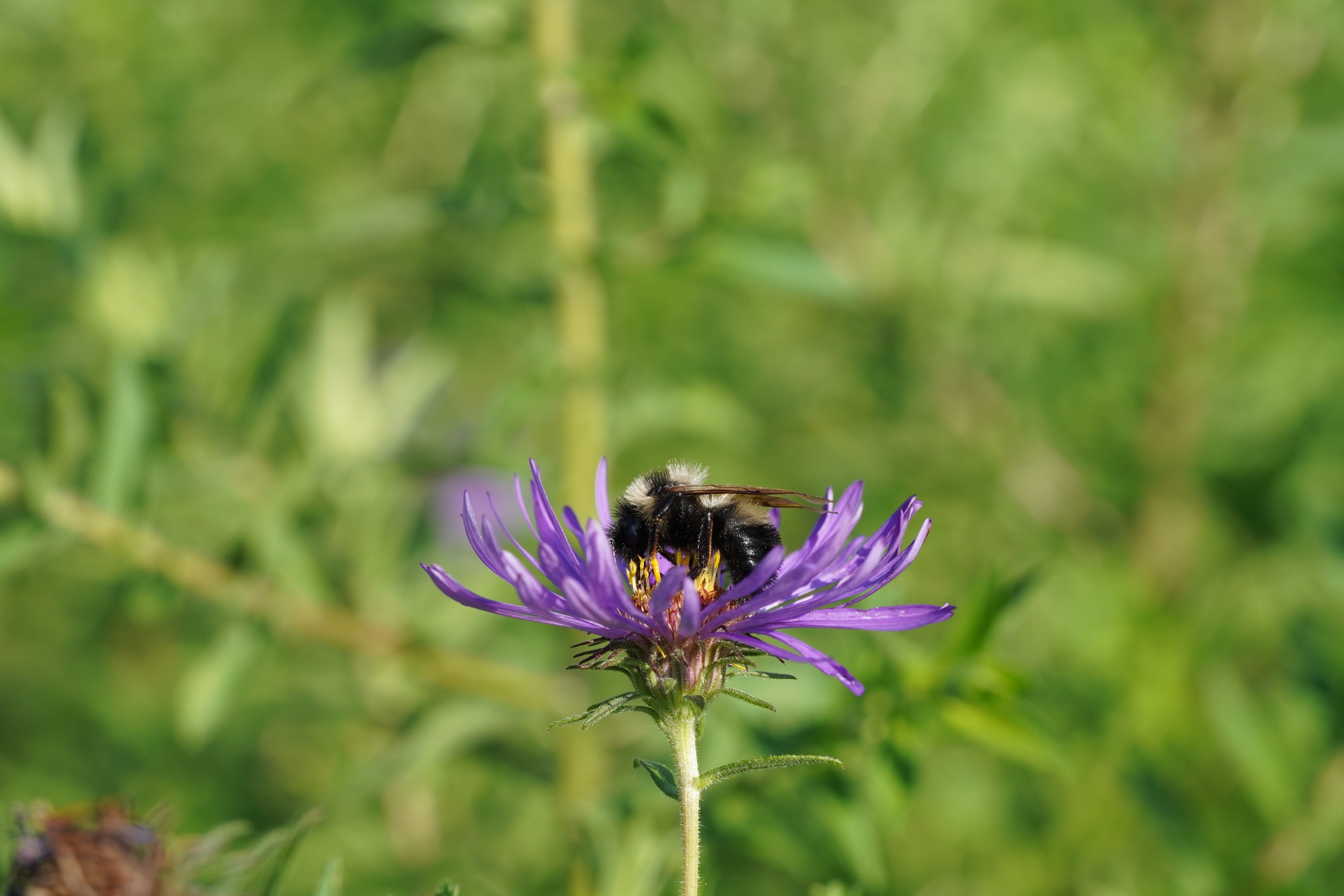
Bombus sp. exhibiting dense velvet pile.
Long-Horned Bees (Melissodes)
Long-horned bees get their common name from the exceptionally long antennae found on males, which can equal or exceed their body length. Females have standard antennae but carry massive, bushy scopae on their hind legs to transport pollen from Asteraceae (sunflowers, coneflowers, asters).
Sunflower Long-Horned Bee (Melissodes trinodis, cf.)
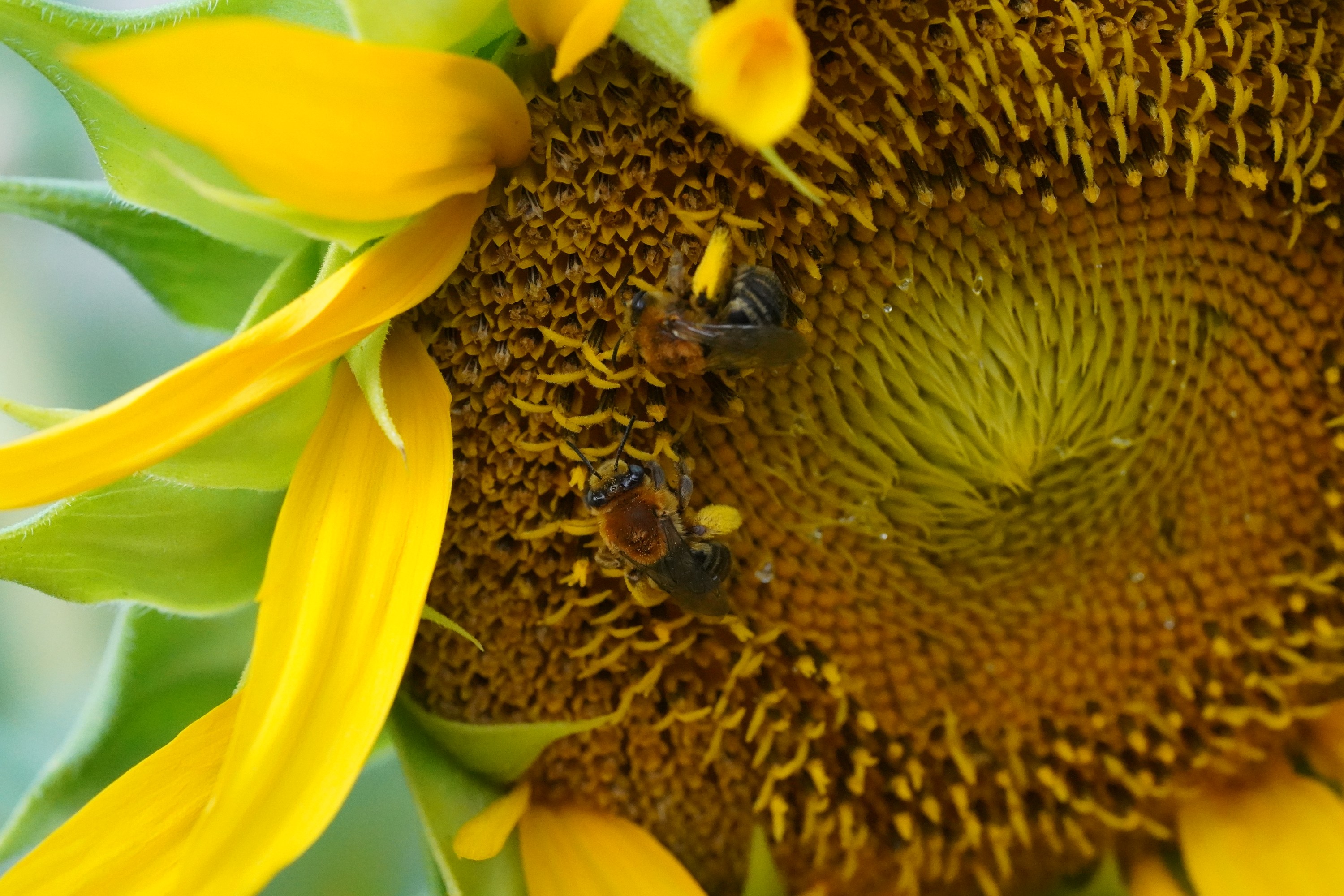
Melissodes cf. trinodis on sunflower. Note the long antennae and pale hairs on the thorax.
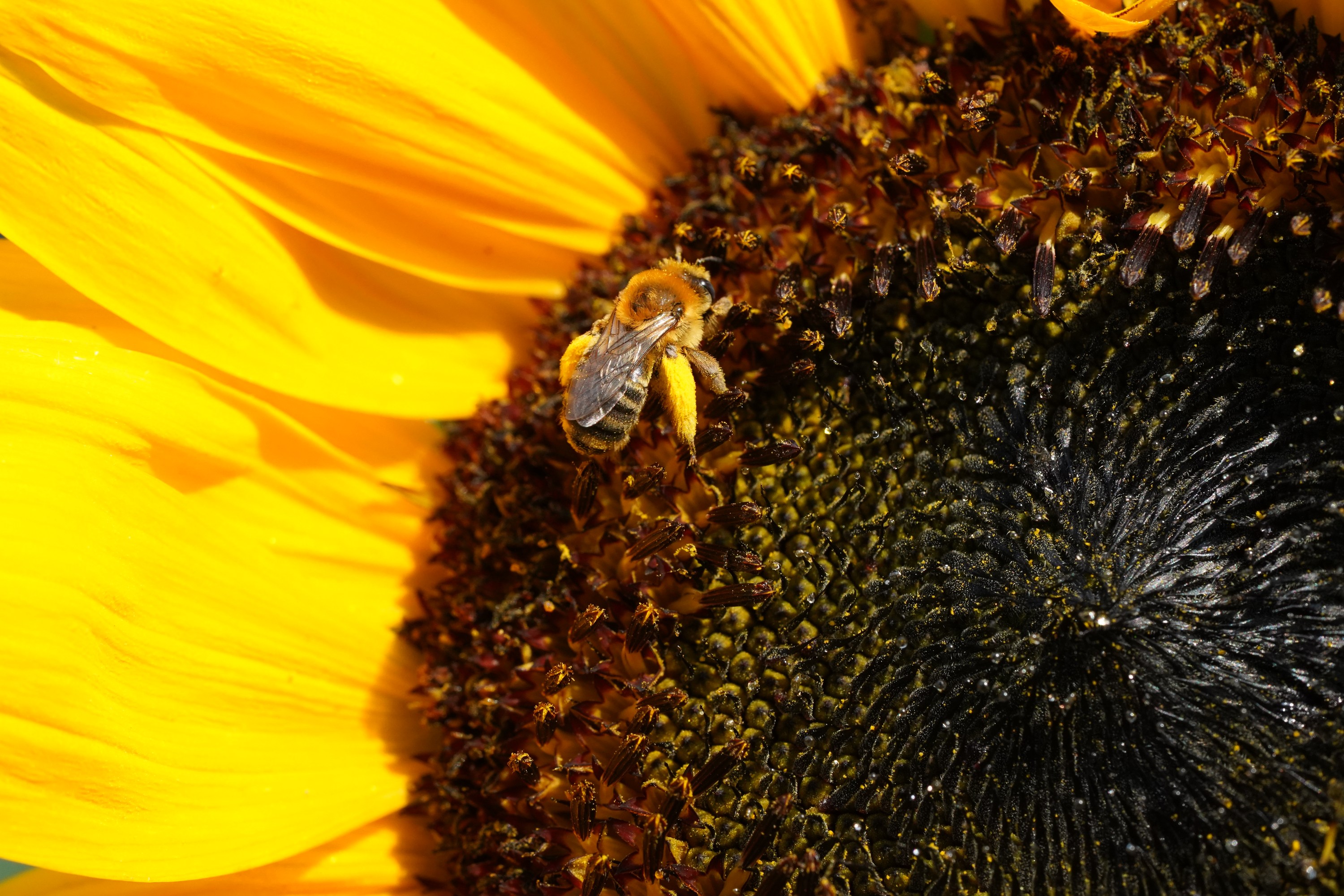
Melissodes cf. trinodis displaying dense hind leg scopae loaded with bright yellow pollen.
Agile Long-Horned Bee (Melissodes agilis, cf.)
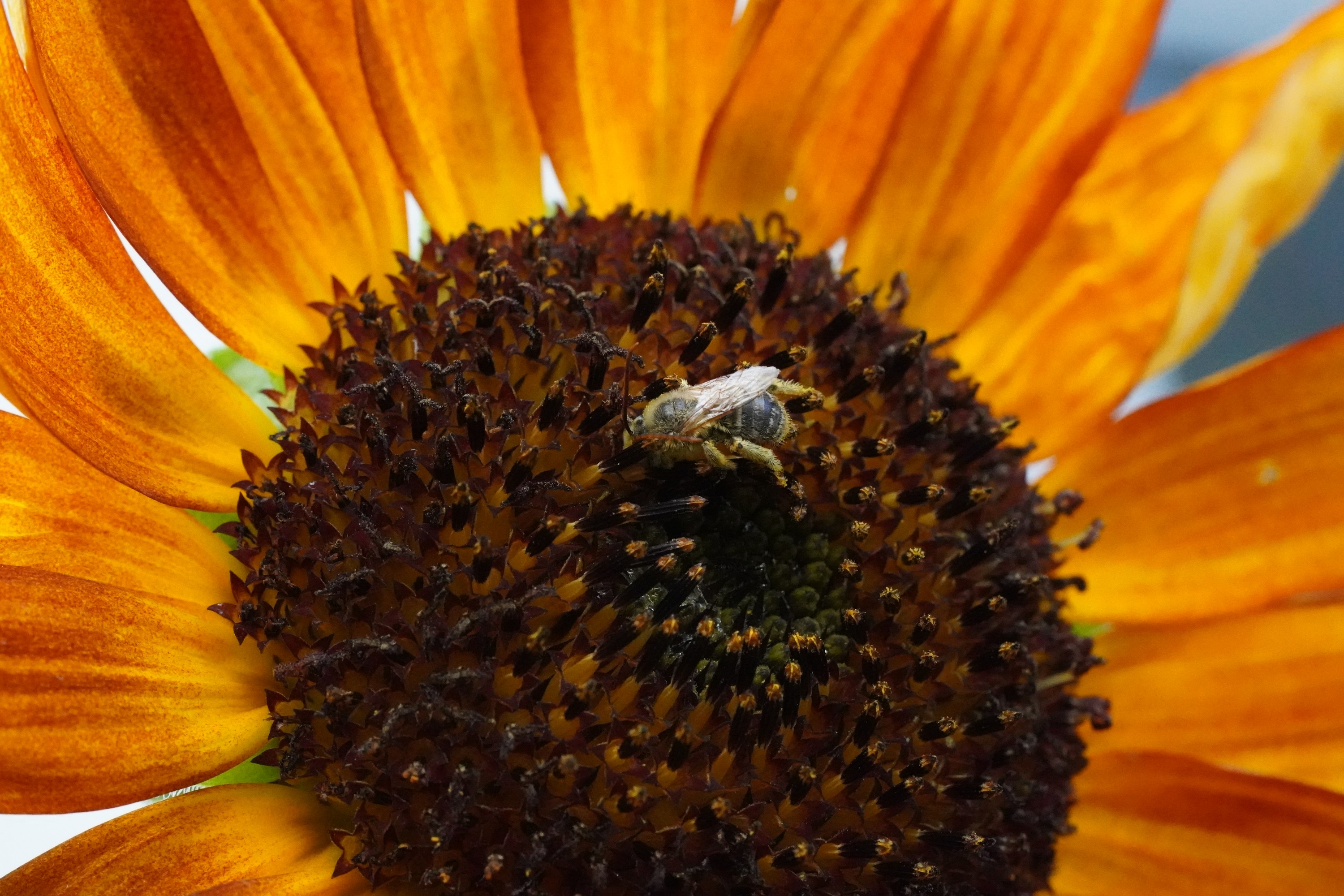
Melissodes cf. agilis male perched with extended antennae.
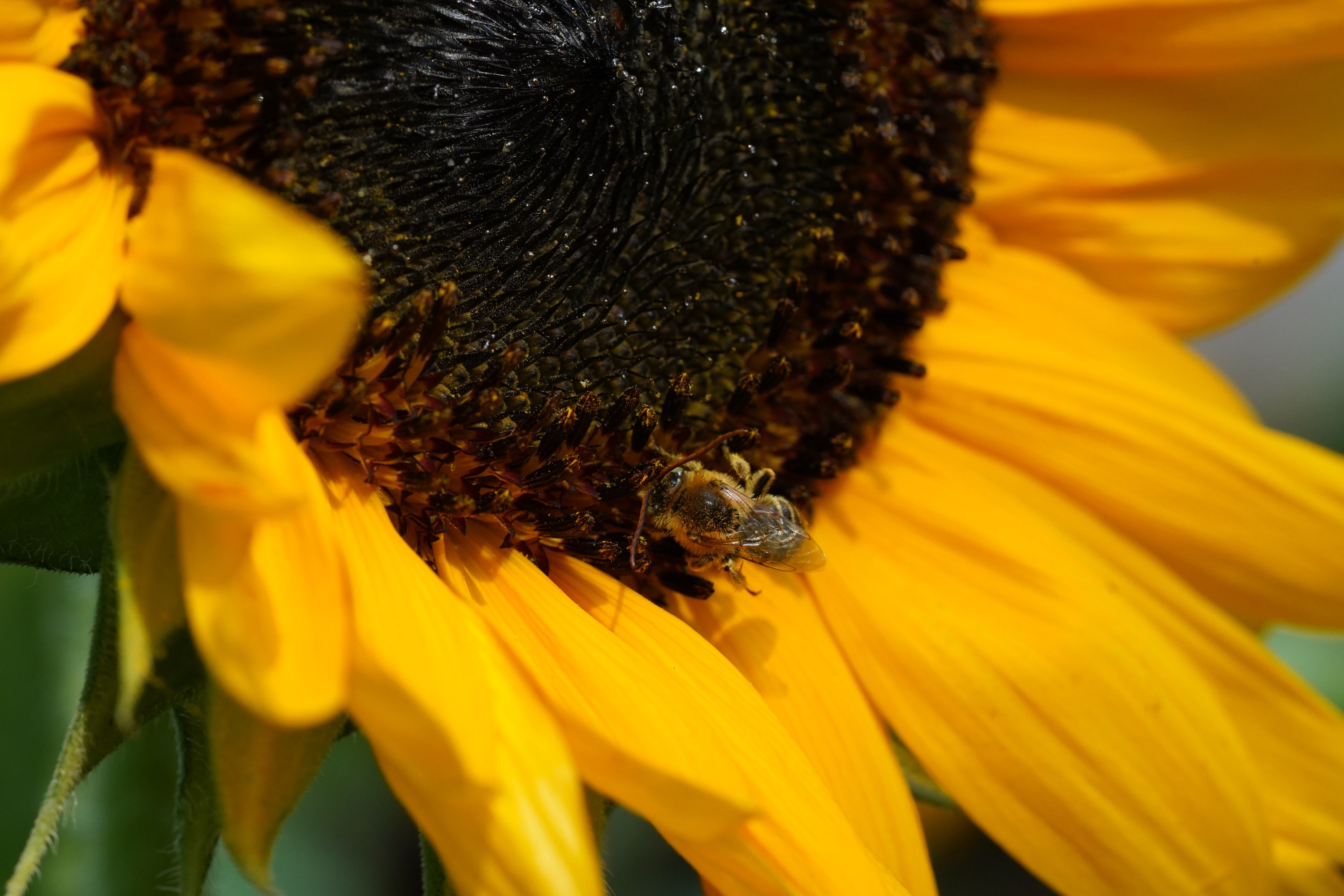
Melissodes cf. agilis macro portrait.
Digger Bees (Anthophora)
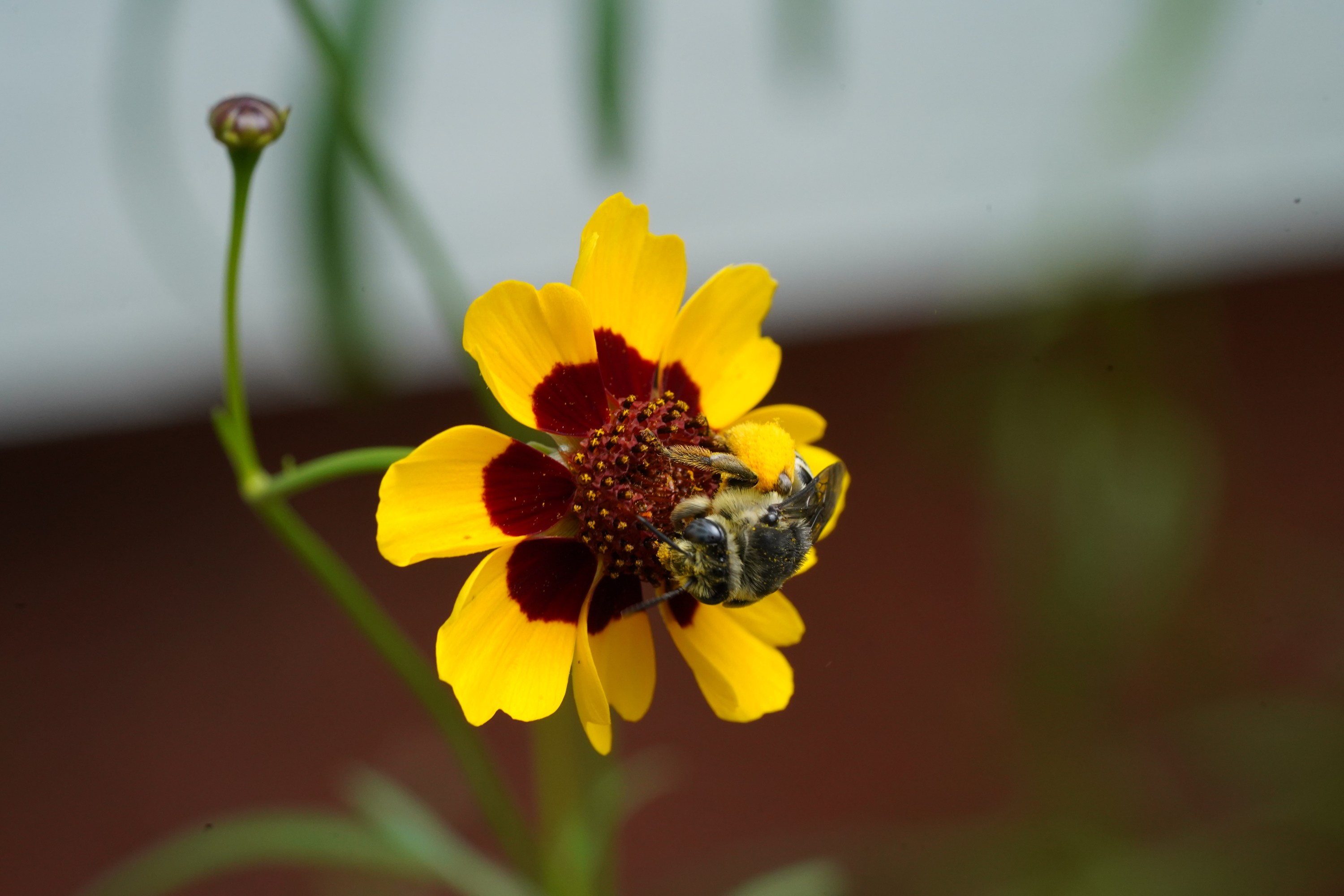
Anthophora sp. Robust, stout body with interesting patterns in the eyes.
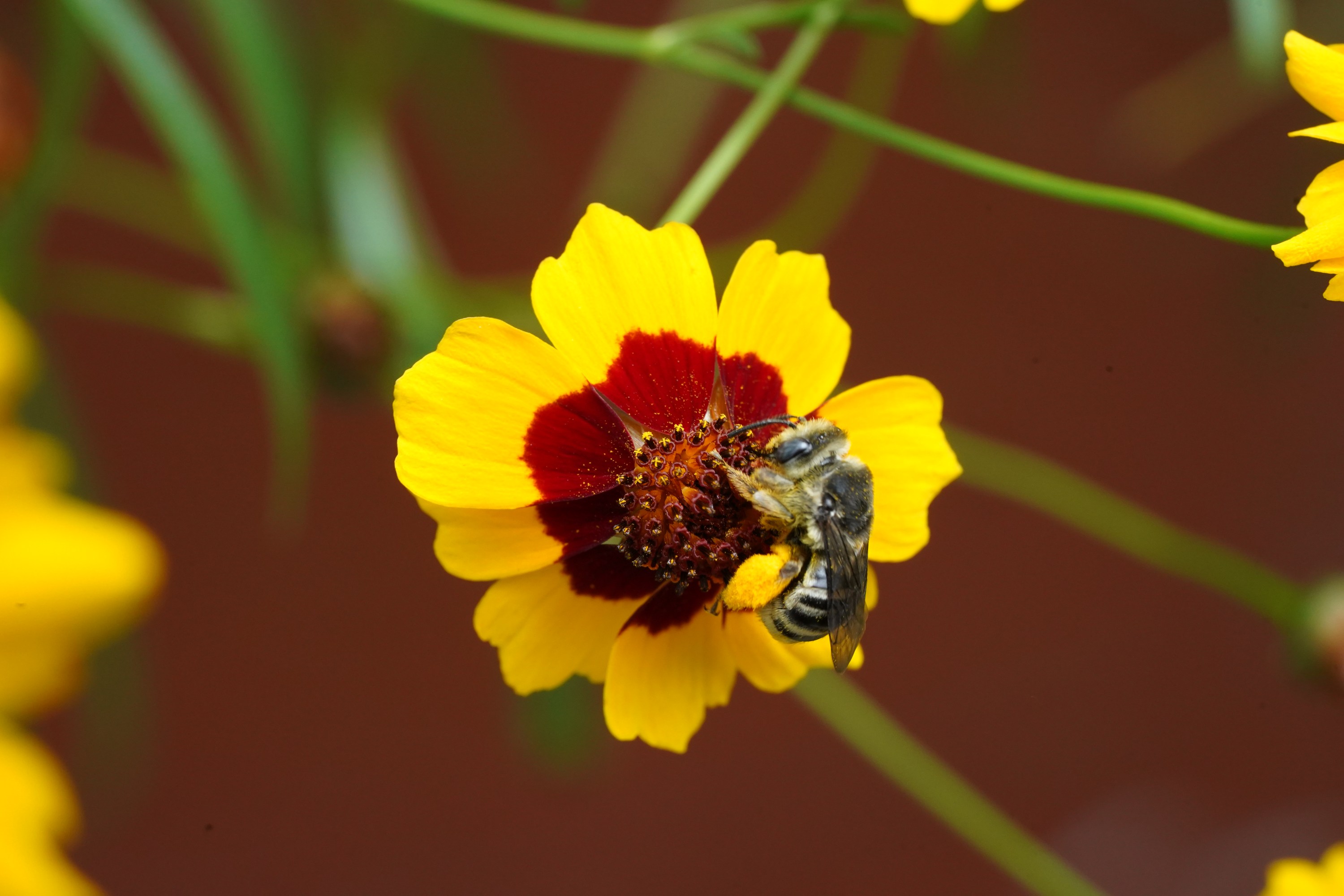
Anthophora sp. Highly agile flyers that excavate burrows in hard-packed soils.
Anthophora are solitary ground-nesting bees known for their rapid, darting flight and high-pitched hover. They have small, hairy bodies and often feature striking white or yellow patterns on the face.
Megachilidae (Leafcutter, Mason, and Carder Bees)
Megachilidae bees differ from other families in one crucial morphological way: non-parasitic females carry pollen on the underside of their abdomen on a dense brush of specialized hairs called a scopa, rather than on their legs. They also have strong mandibles for gathering nesting materials.
Carder / Resin Bees (Paranthidium)
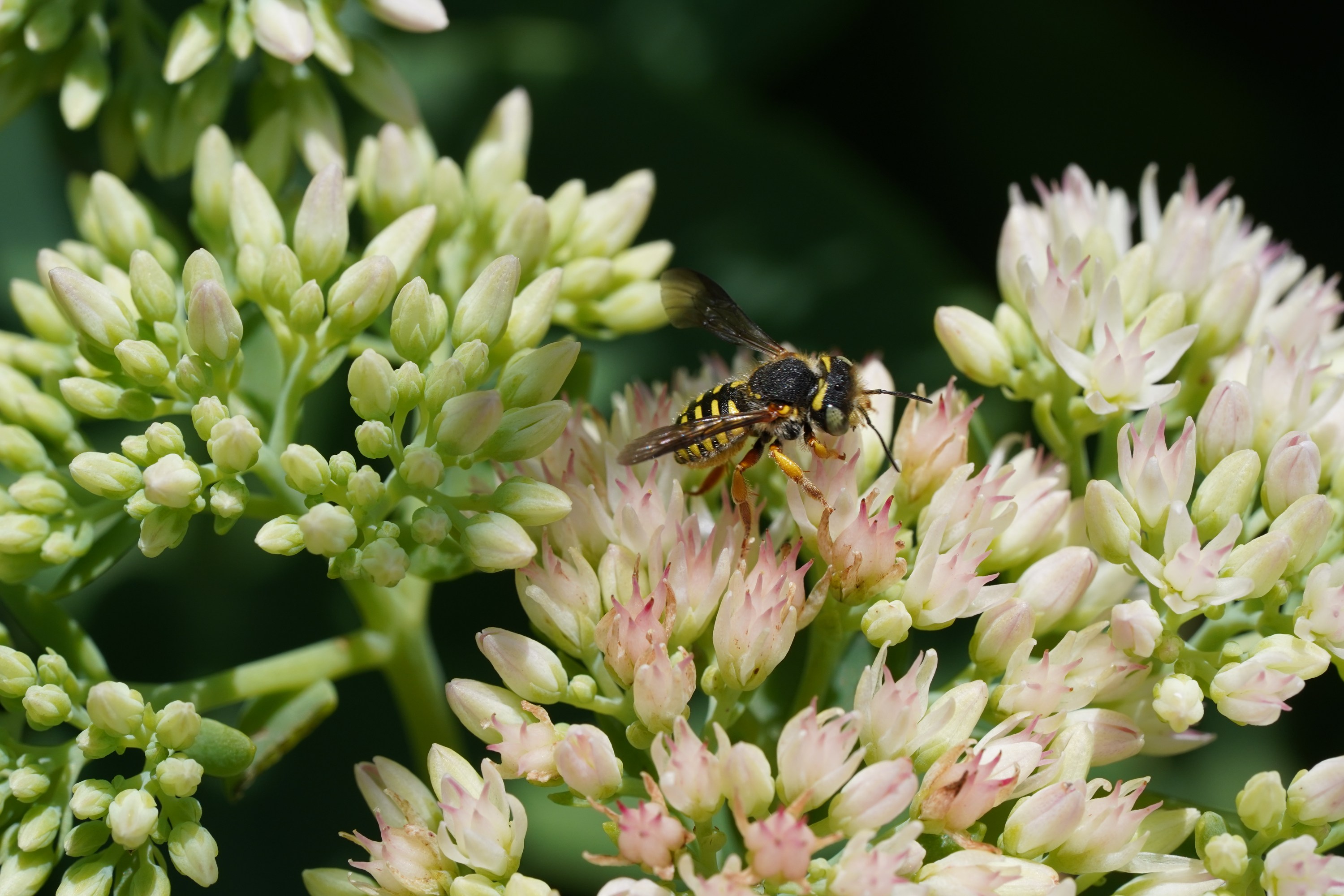
Paranthidium sp. striking yellow-and-black abdominal markings and stout, compact build.
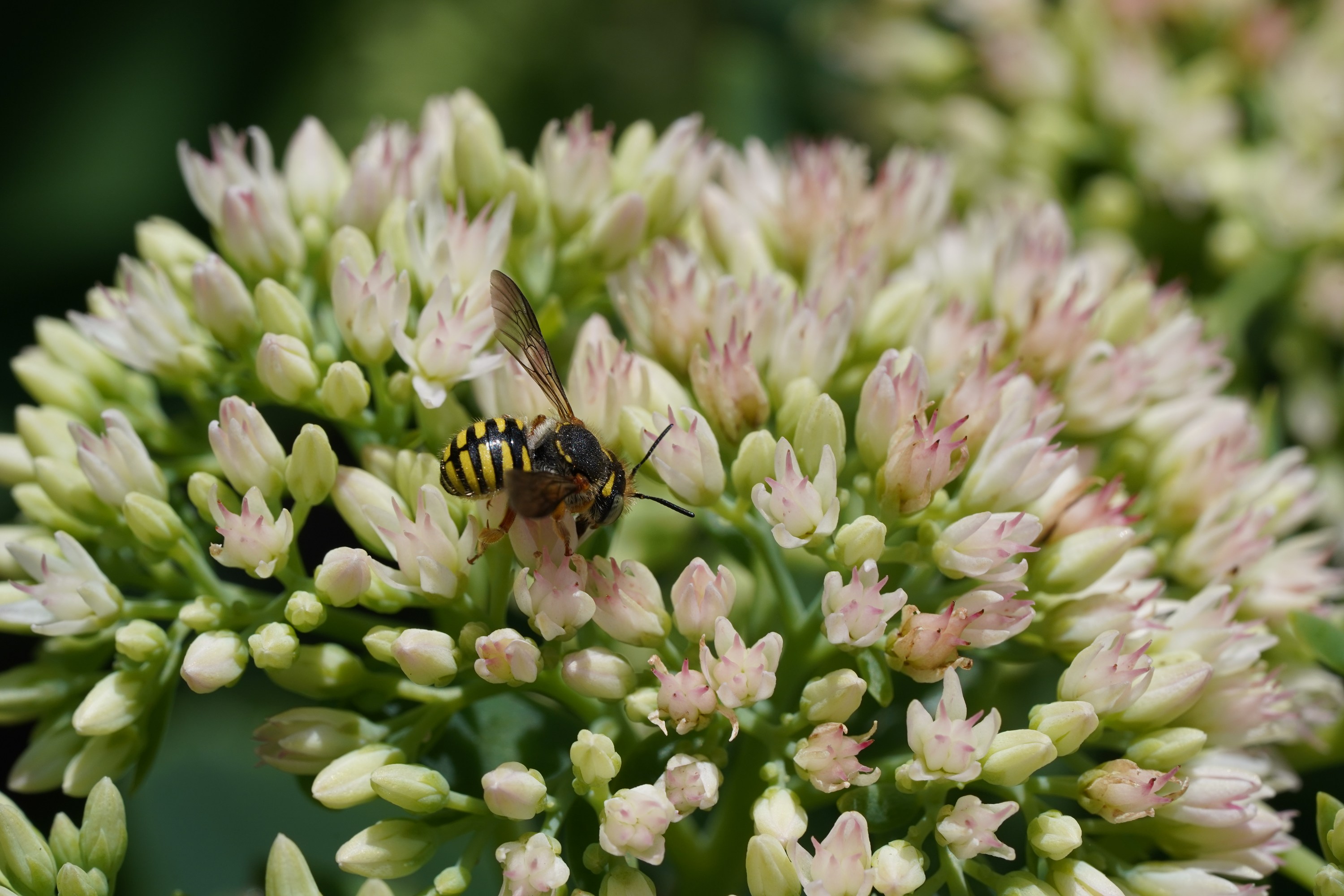
Paranthidium sp. is the least bee-looking bee that I’ve photographed. I’ve only seen them on this specific type of seedum.
Paranthidium are solitary bees with vivid yellow/cream markings on a black background. Unlike many bees where yellow comes from hair, their color is in the cuticle itself. They use plant resins and pebbles to construct brood partitions.
Mason Bees (Osmia)
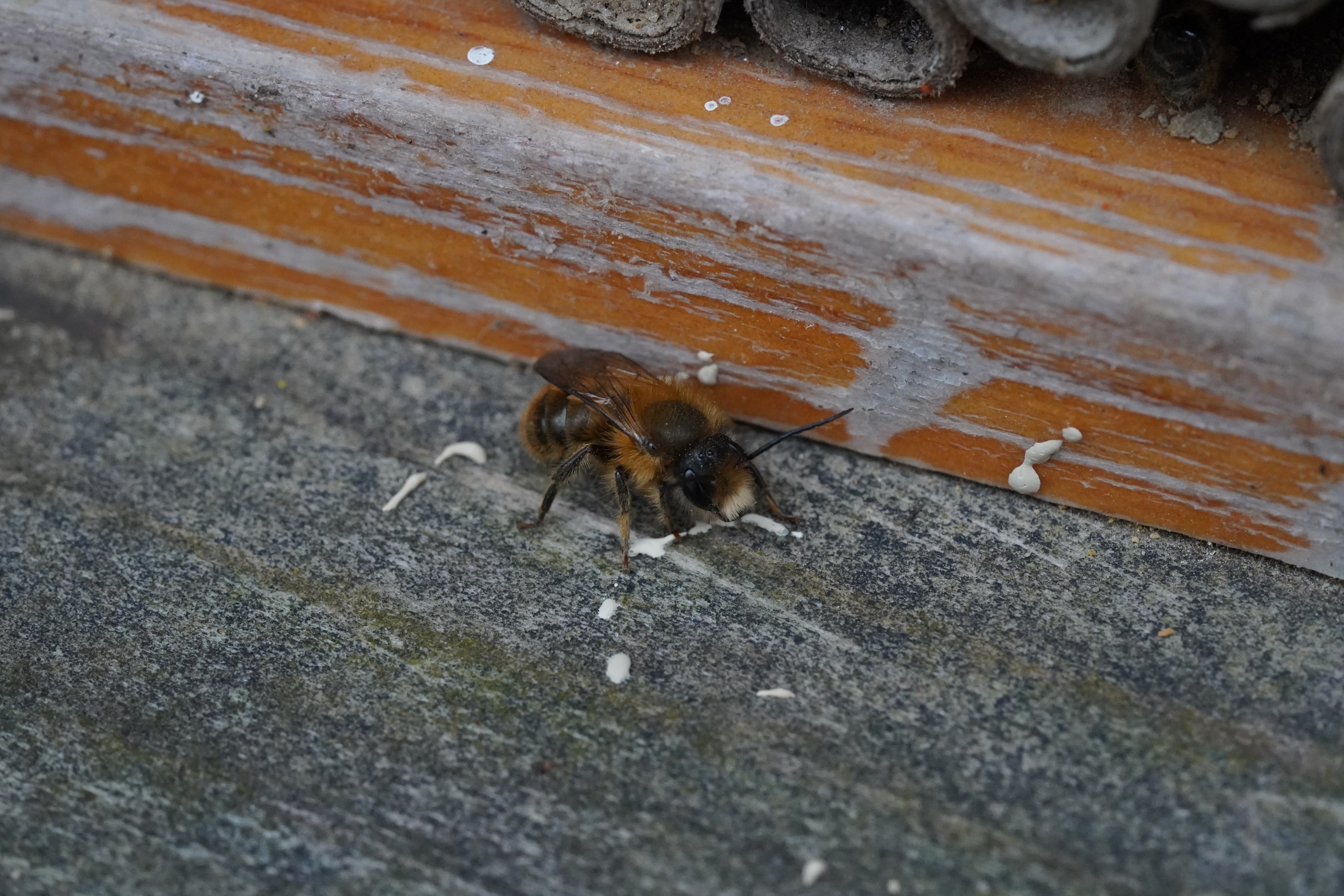
Osmia sp. (Mason Bee). I suspect Osmia bicornis based on behavior, but Osmia taurus and Osmia cornifrons could also fit.
Mason bees are spring-flying solitary bees that nest in hollow reeds, drill holes, or beetle burrows, dividing brood cells with partitions made of damp mud or chewed leaf mastic. I keep several boxes of this species, which have a blond mustache and, in keeping with their namesake, build cement-like walls to seal off their tube nests to keep their brood safe until the next season.
Cuckoo Carder Bees (Stelis, cf.)
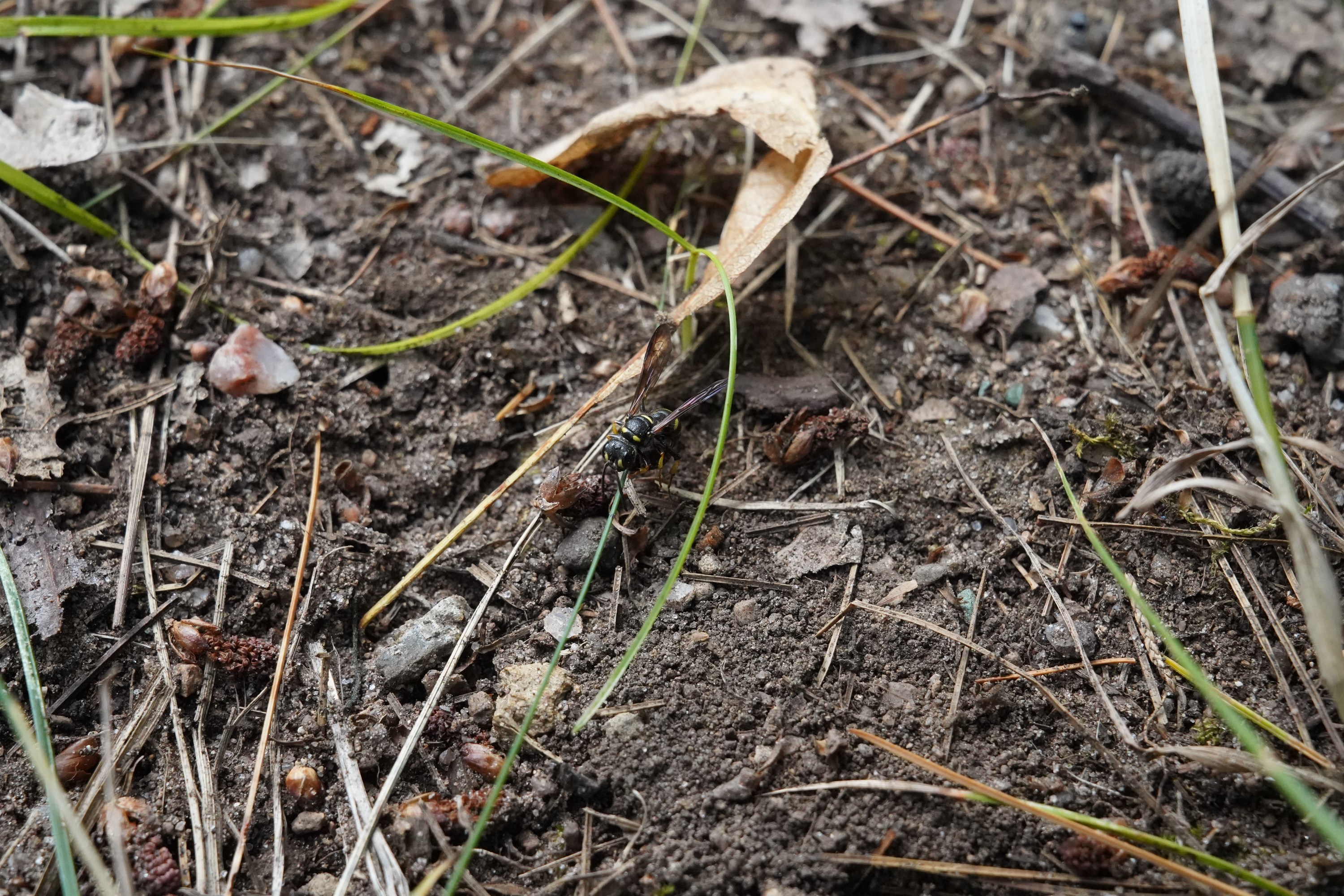
Stelis cf. sp. Cleptoparasitic megachilid lacking abdominal scopa, featuring subtle cream/yellow spots.
Stelis are cleptoparasites of other Megachilids (such as Osmia and Paranthidium). Because they sneak into host nests to lay their eggs, females have lost the abdominal pollen scopa entirely.
Halictidae (Sweat Bees)
Halictidae is a huge family containing some of the most vibrant, metallic colored bees. They are very hard to tell apart, except for the intensely colored ones, and all generally very small.
Metallic Green Sweat Bees (Agapostemon)
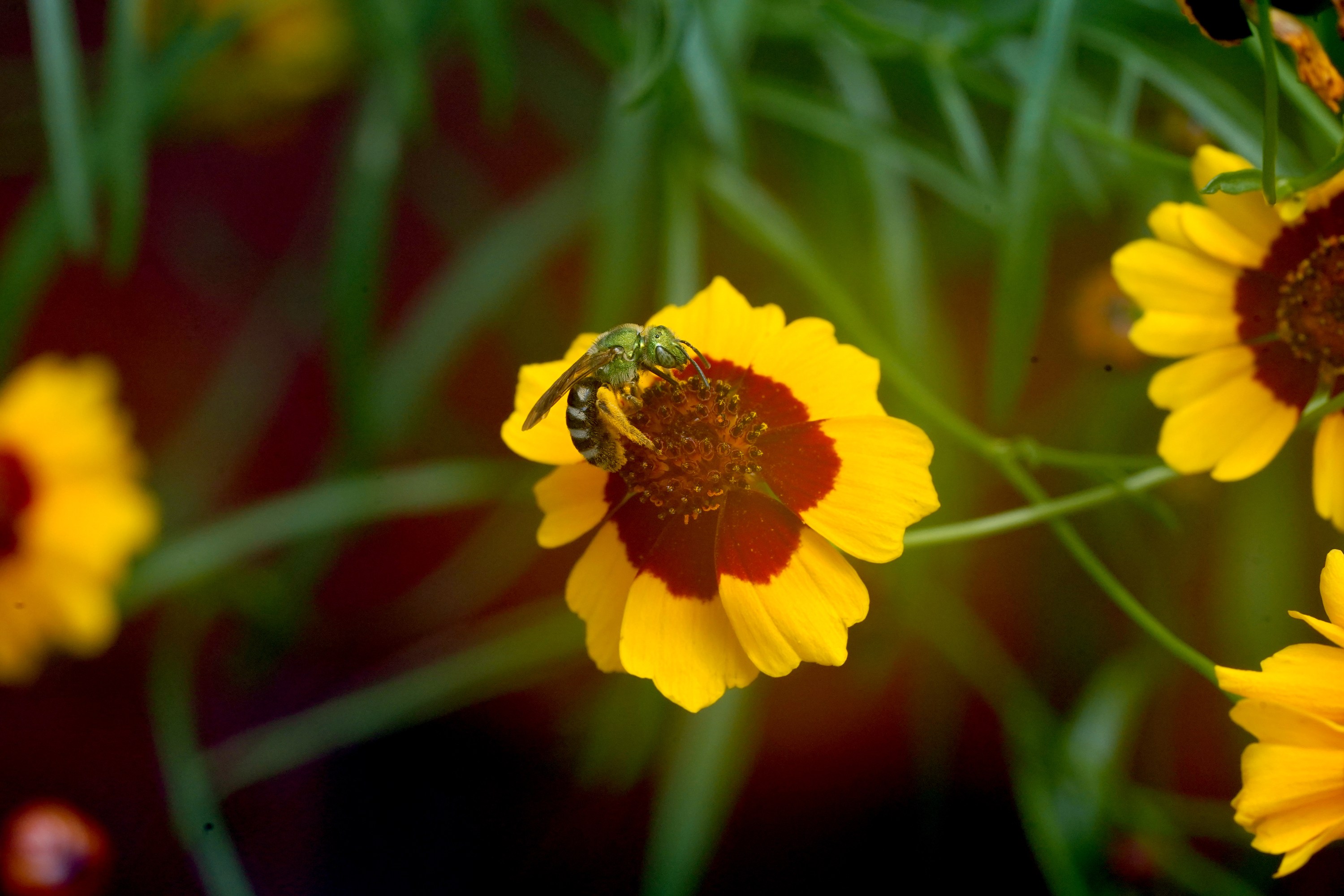
Agapostemon sp. Brilliant iridescent emerald-green head and thorax with distinctive striped abdomen.
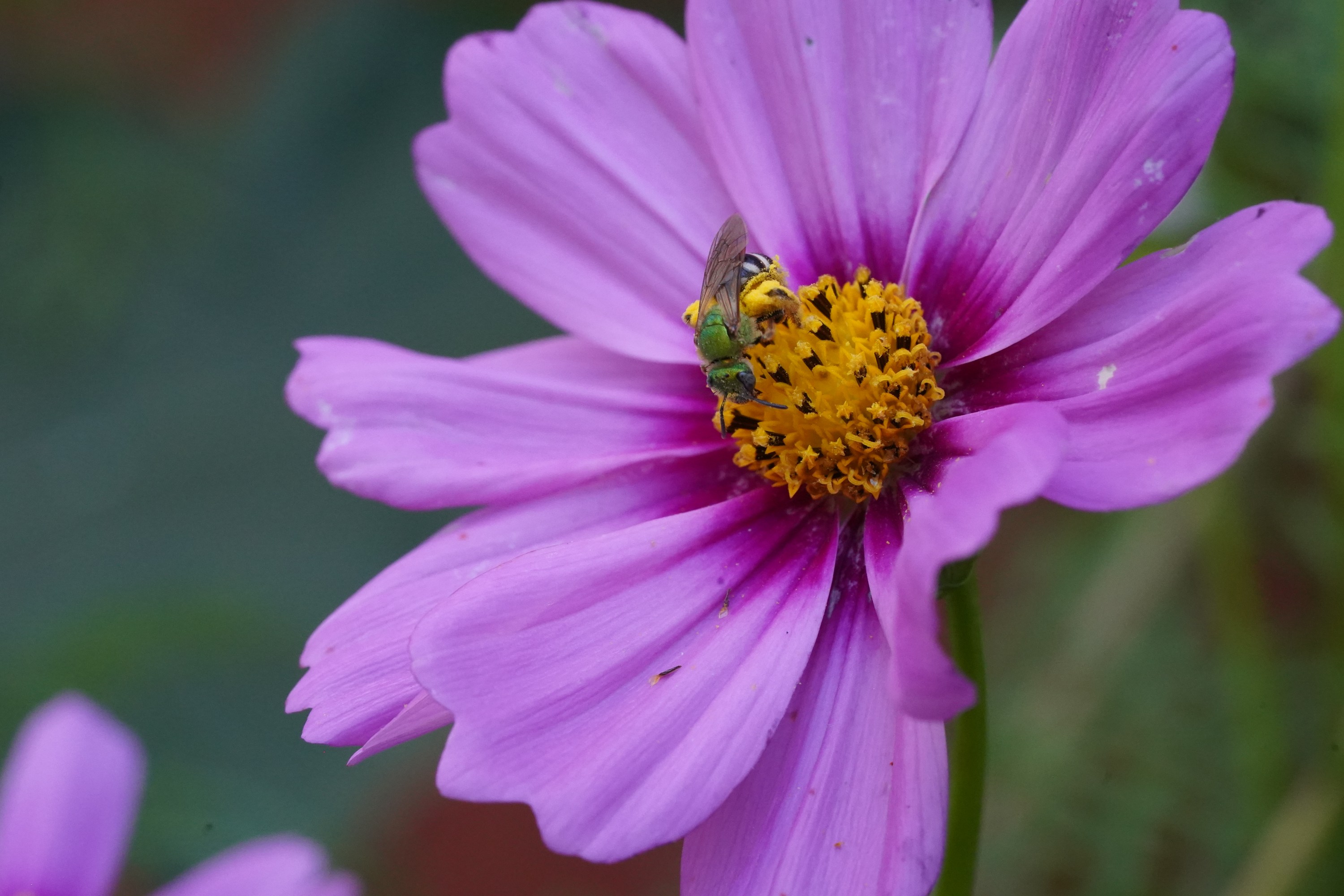
Agapostemon sp. showing intense metallic green cuticle reflections shimmer.
Agapostemon are among the most eye-catching wild bees, with dazzling emerald green heads and thoraces.
Pure Green Sweat Bees (Augochlora)
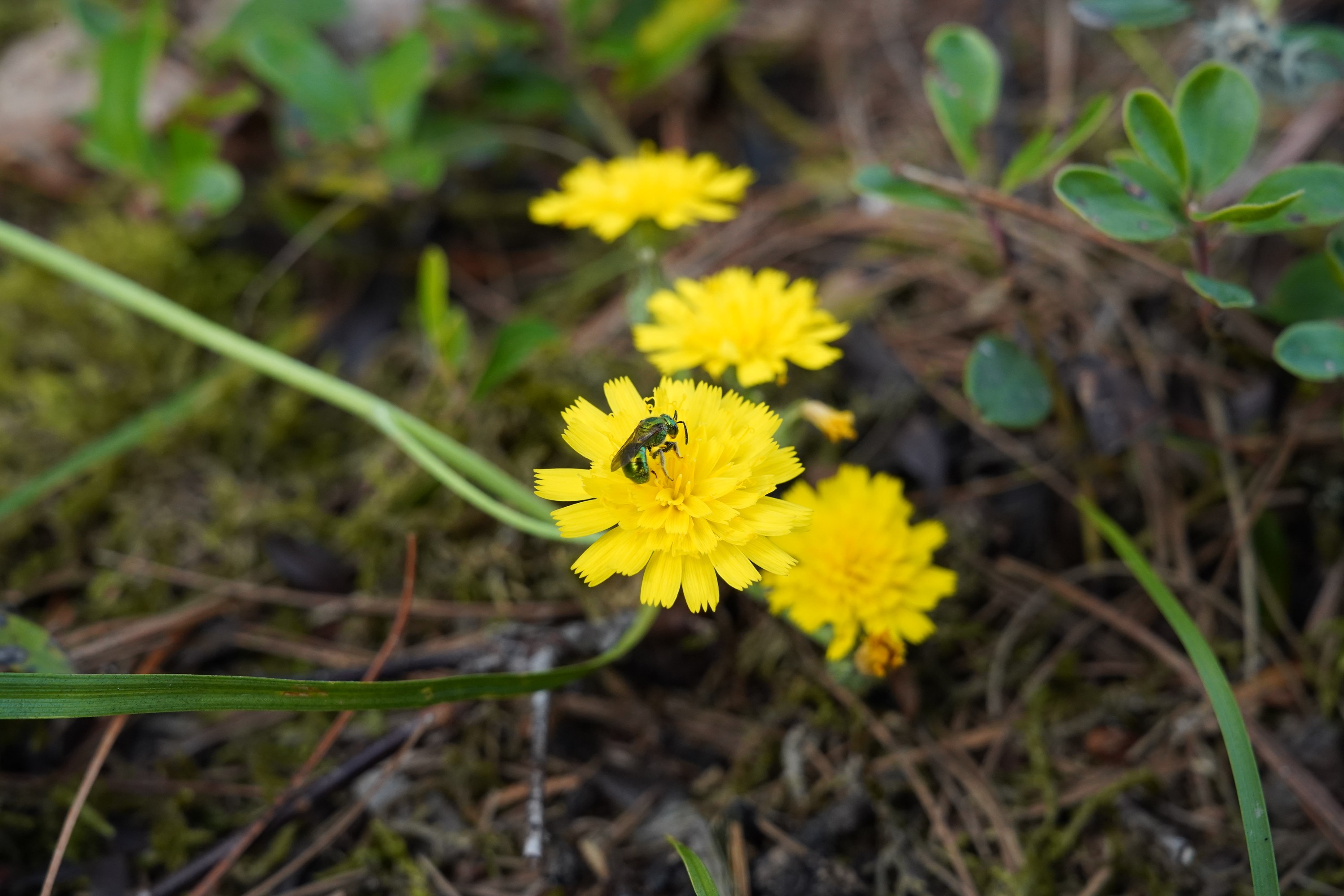
Augochlora sp. Entire body glowing with solid iridescent metallic green and golden highlights.
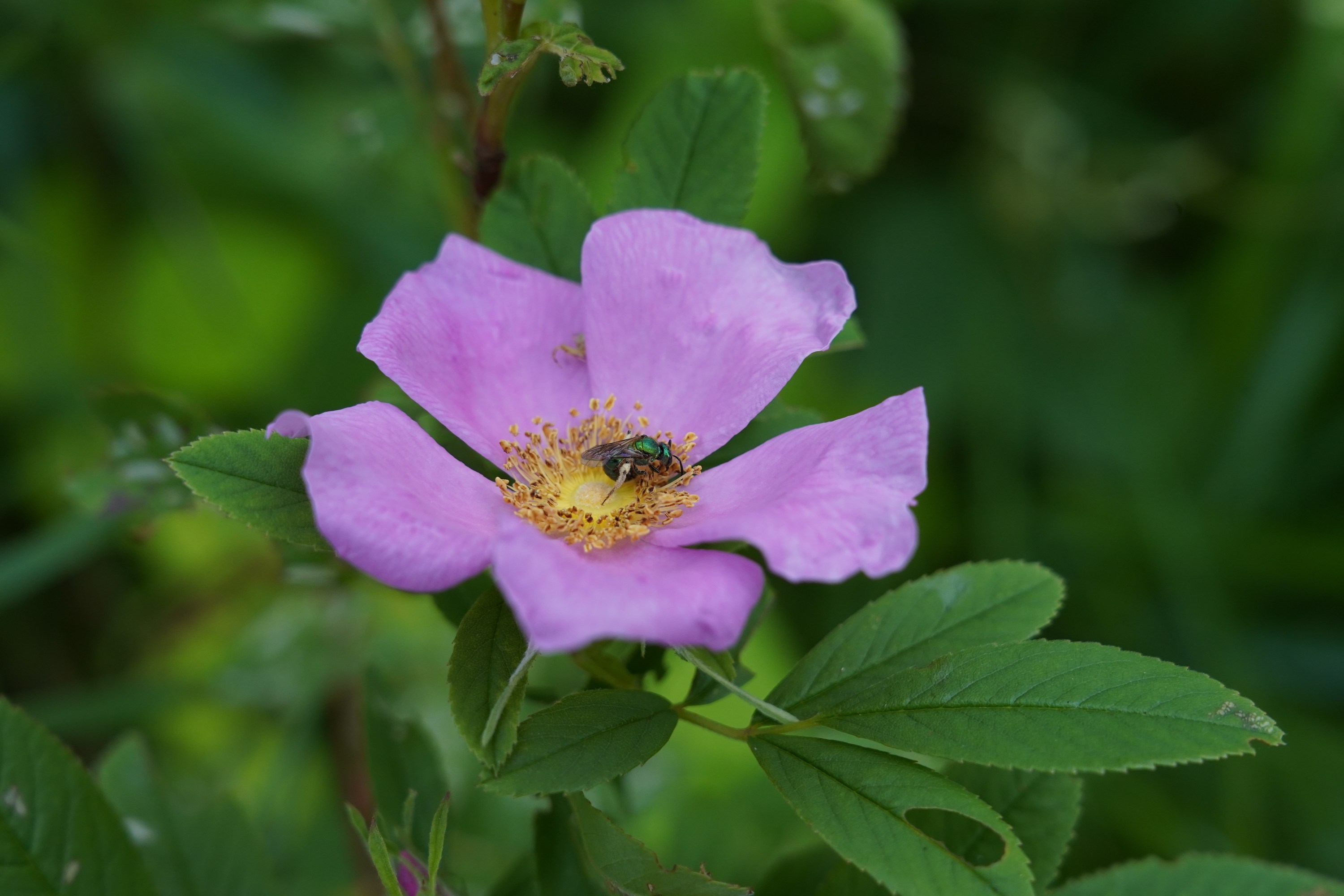
Augochlora sp. the one other time I saw one. Not common in Pennsylvania.
Unlike Agapostemon, Augochlora bees are completely metallic green over their entire body, from head to the tip of the abdomen. They often nest in rotting logs and damp wood.
Furrow Bees (Halictus)
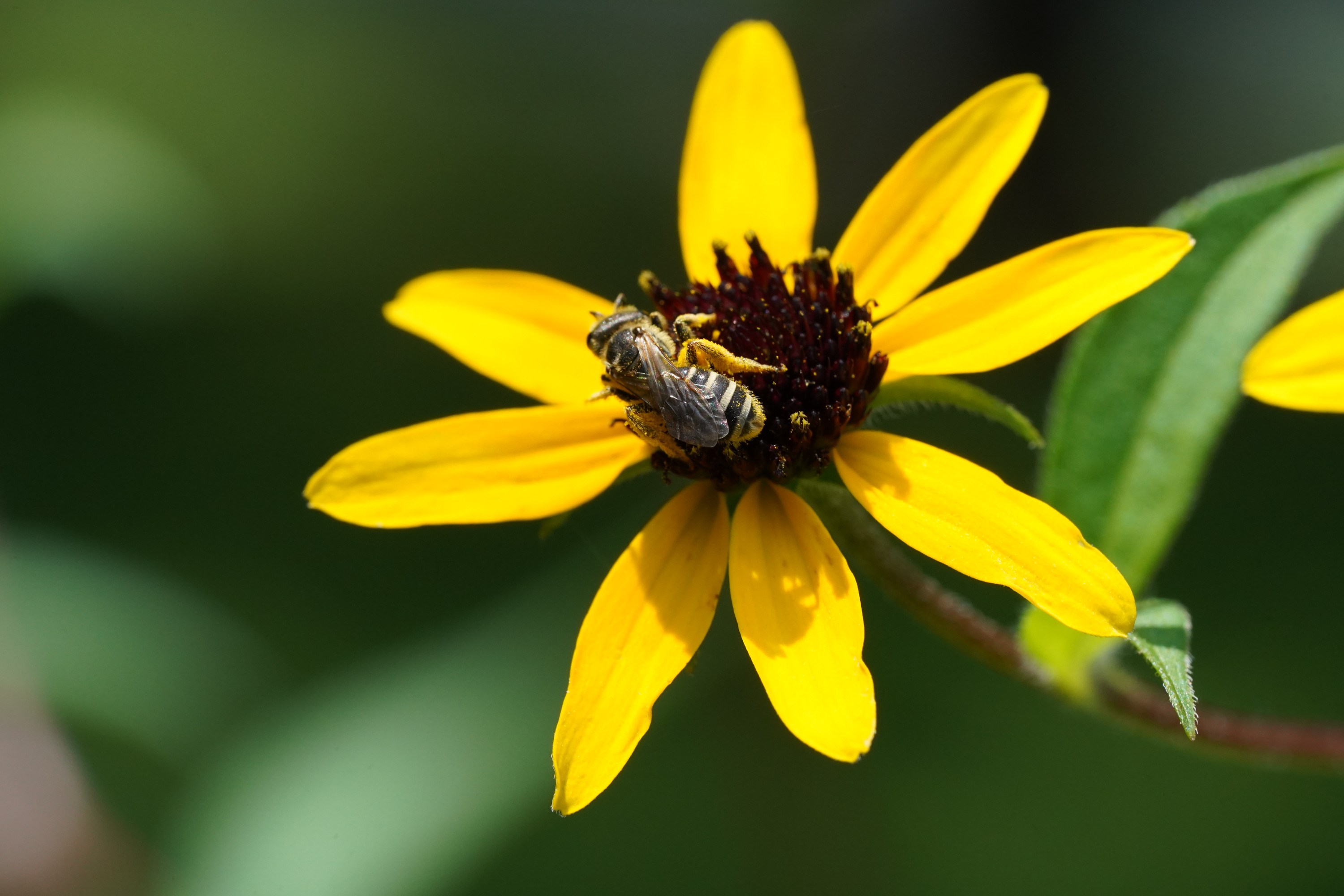
Halictus sp. Dark furrow bee with prominent pale hair bands along the trailing edges of the abdominal segments.
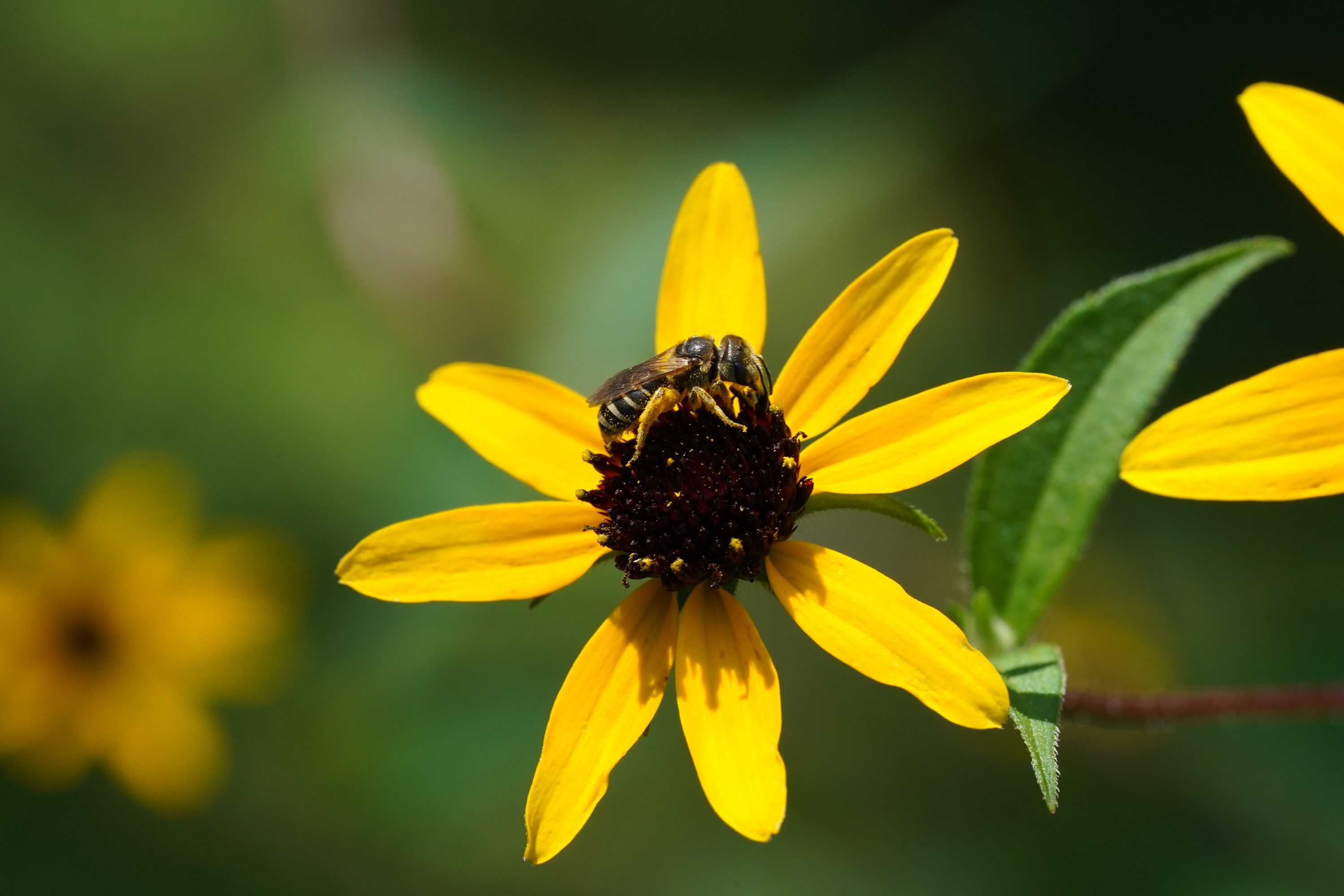
Halictus sp. foraging on daisy. Note the apical abdominal bands.
Halictus species are dark brown/black with distinct bands of pale hair situated on the apical (trailing) margin of each abdominal segment.
Micro & Dark Sweat Bees (Lasioglossum)
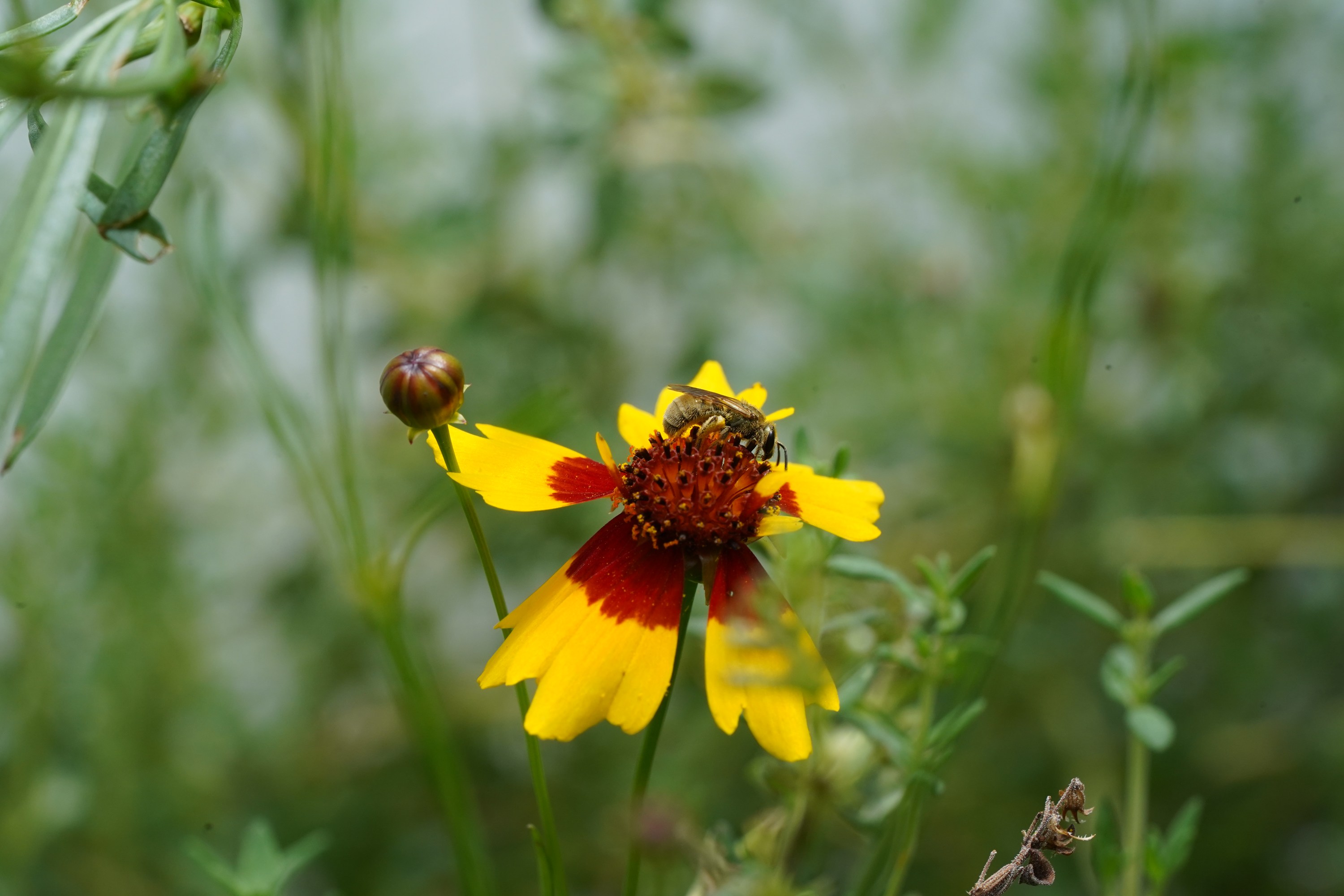
Lasioglossum sp. Tiny solitary sweat bee (4-6mm) with subtle brassy sheen.
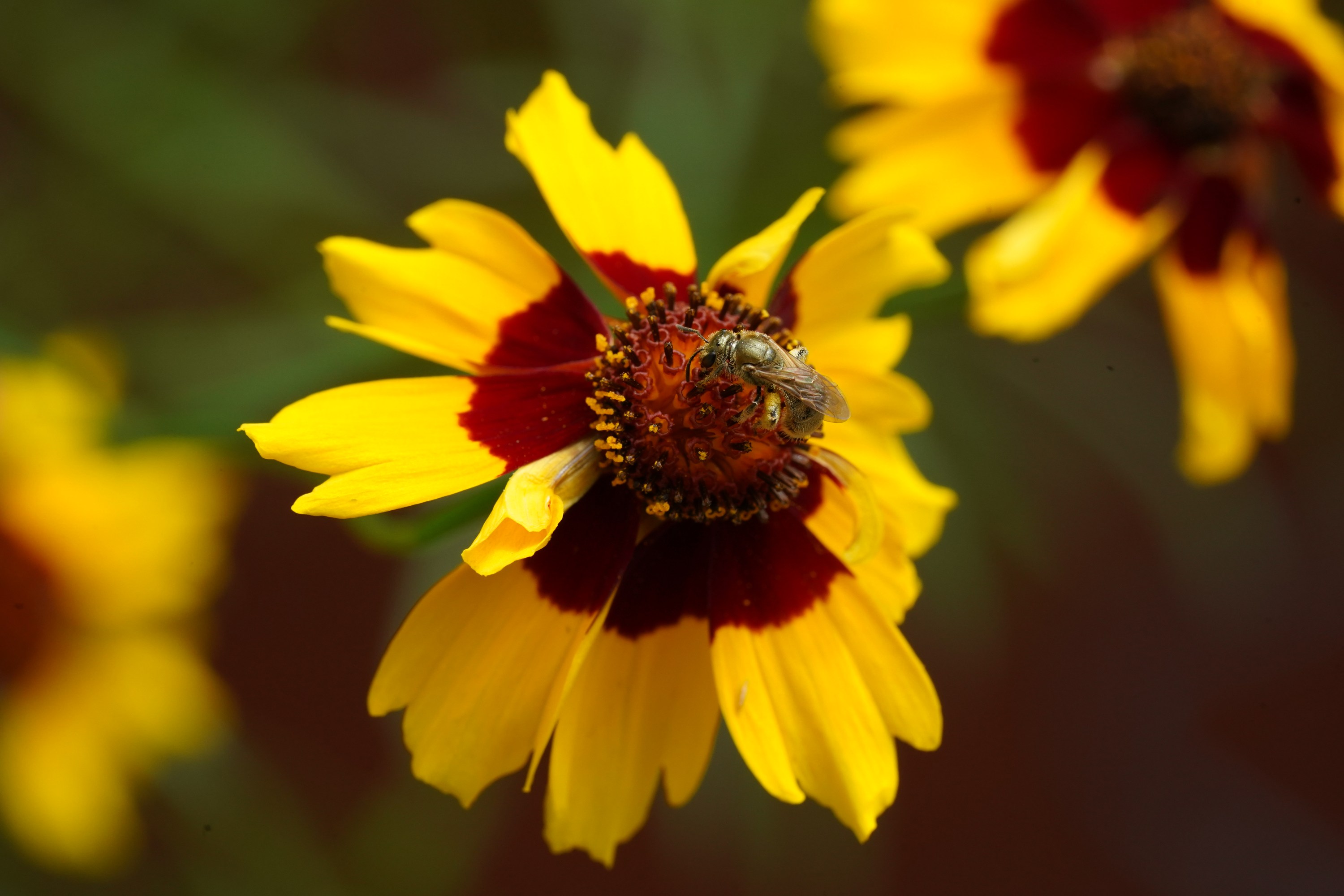
Lasioglossum sp. showing fine wing details.
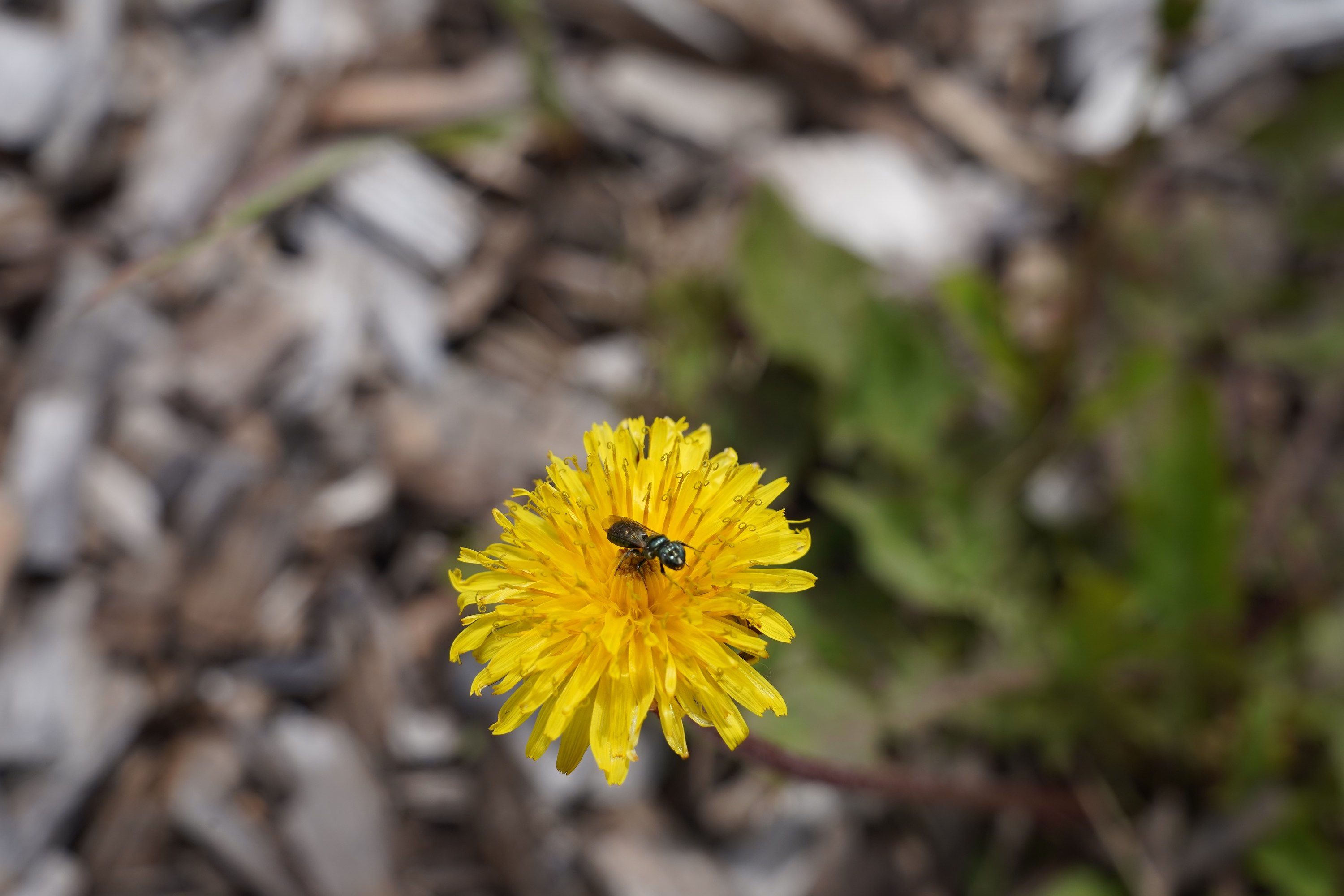
Lasioglossum sp. on blossom.
Lasioglossum is one of the most species-rich genera in North America, and these images are potentially all different species. They are small (often 3–7 mm) and can be distinguished by their basal (leading edge) abdominal hair bands.
>> Home